Oahu Forest National Wildlife Refuge (SW, 0mi), Honolulu
Parks in Hawaii
Near Pearl City, HI in Hawaii
What to Pack for Oahu Forest National Wildlife Refuge (SW, 0mi), Honolulu
The right gear makes all the difference — here's a packing list tailored to this area.
Your packing list for Oahu Forest National Wildlife Refuge should account for the Tropical terrain and Unknown.
Essential
-
Water (minimum 2L) — Water sources marked on maps may be seasonal or dry; carrying enough to complete your route prevents a dangerous shortfall.
-
Navigation (map/GPS/compass) — Getting lost is the leading cause of backcountry search-and-rescue calls; reliable navigation prevents the situation entirely.
-
Sun protection (sunglasses, sunscreen) — Prolonged sun exposure causes headaches, fatigue, and heat exhaustion that can cut a trip short or create a medical emergency.
-
First aid kit — Remote locations mean longer response times for help; a first aid kit bridges the gap between injury and professional care.
-
Extra food — High-energy snacks weigh little but provide crucial fuel if you need to bushwhack out or wait for conditions to improve.
-
Headlamp with extra batteries — Hands-free light is essential for navigating uneven terrain, setting up camp, or signaling for help at night.
-
Fire starter — Waterproof matches or a ferro rod weigh almost nothing and can be the difference between a cold night and a survivable one.
-
Emergency shelter (space blanket) — Wind and rain strip heat faster than most people realize; a compact emergency shelter blocks both.
-
Knife or multi-tool — A multi-tool handles problems you can't predict: jammed zippers, tangled line, first-aid tape cutting, or gear fixes on the trail.
-
Extra clothing layer — A lightweight fleece or puffy stuffs small but provides critical insulation if temperatures drop unexpectedly.
Activities & Best Time to Visit Oahu Forest National Wildlife Refuge (SW, 0mi), Honolulu
The Tropical terrain here lends itself to a range of outdoor activities throughout the year.
Visitors come to Oahu Forest National Wildlife Refuge primarily for birdwatching, though the Tropical terrain opens up other options too.
With a photography score of 35/100, Oahu Forest National Wildlife Refuge offers Exceptional dark sky (Bortle 1-2) and 1 excellent meteor showers worth capturing.
Activities
-
birdwatching — Binoculars and field guides help track seasonal migrations and rare sightings.
-
hiking — Hiking ranges from gentle nature walks to challenging summit climbs.
-
photography — Golden hour and dramatic weather can transform ordinary scenes into striking images.
-
picnicking — Picnicking turns a scenic overlook or shady grove into a memorable gathering spot.
-
scuba_diving — Scuba diving reveals reefs, shipwrecks, and aquatic life up close.
-
snorkeling — Snorkeling offers an accessible way to view reefs and clear waters.
-
walking — Walking lets you slow down and notice details — wildflowers, birdsong, shifting light through trees.
-
wildlife_viewing — Early mornings and dusk offer the best chances to quietly spot native wildlife.
Best months: May, Jun, Jul, Aug, Sep
Terrain: Tropical — Dense plant growth and broadleaf species dominate many tropical areas.
Nature & Wildlife at Oahu Forest National Wildlife Refuge (SW, 0mi), Honolulu
The Tropical terrain here supports a rich ecosystem worth noticing as you explore.
The forests and meadows around Oahu Forest National Wildlife Refuge support a diverse community of wildlife, from Humpback Whale and Hawaiian Monk Seal to Western Cattle-Egret and Common Myna.
Trees (2)
-
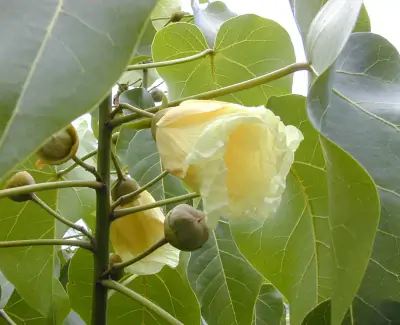 Portia tree — The trunk may be twisted in windy environments.
 -
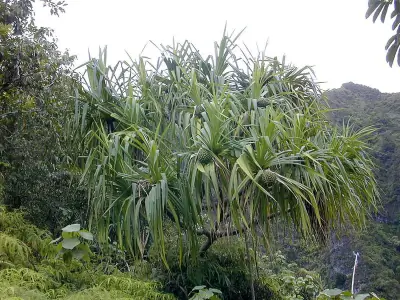 thatch screwpine — Leaves have sharp edges and pointed tips.
Shrubs (1)
-
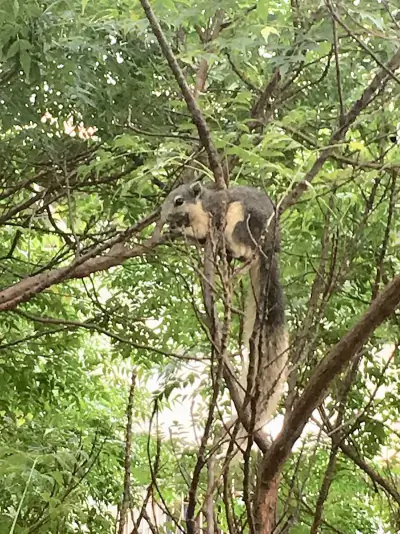 White leadtree — Seed pods are narrow and elongated.
Other Plants (5)
-
beach naupaka
-
Beach Morning Glory
-
Sea Almond
-
coconut palm
-
Guinea Grass
Mammals (4)
-
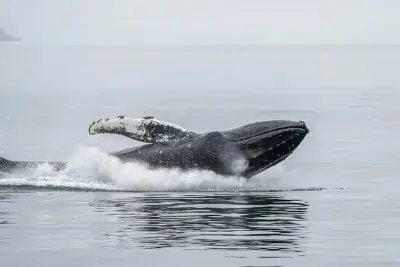 Humpback Whale — Dark body with white underside markings unique to each individual.
 -
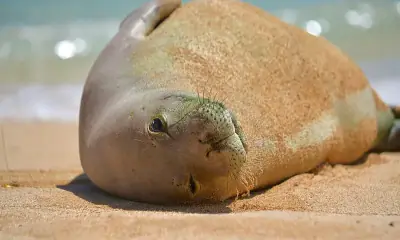 Hawaiian Monk Seal — Whiskered snout and streamlined body.
 -
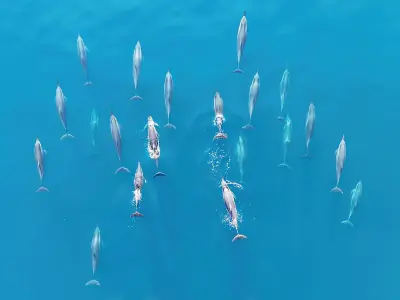 Spinner Dolphin — Known for spinning leaps out of the water.
 -
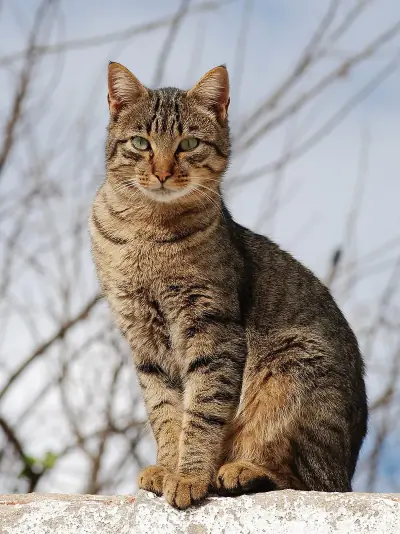 Domestic Cat — Retractable claws and sharp teeth adapted for hunting.
Birds (15)
-
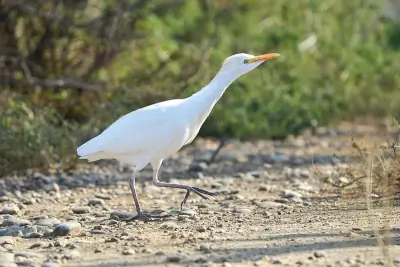 Western Cattle-Egret — Buff-orange plumes in breeding
 -
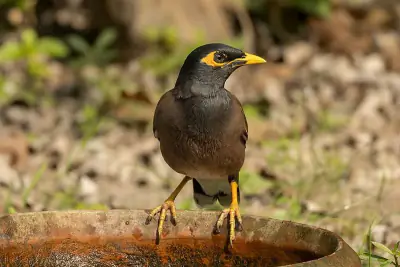 Common Myna — Black head
 -
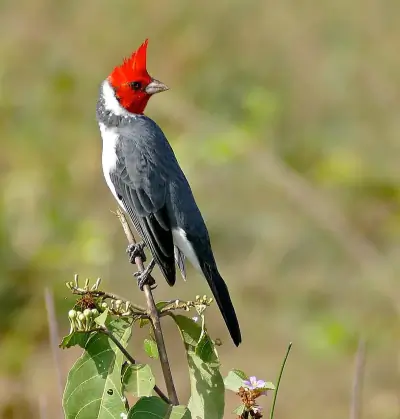 Red-crested Cardinal — Gray upperparts
 -
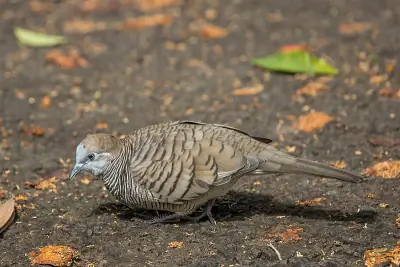 Zebra Dove — Blue eye ring
 -
 House Sparrow — Plain brown female with buff eyebrow
Reptiles (5)
-
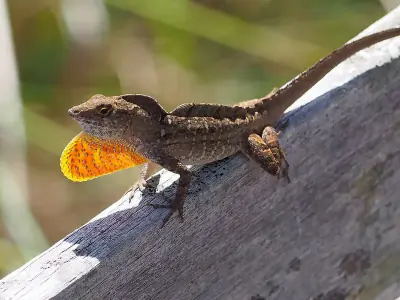 Brown Anole — Males display an orange-red throat fan.
 -
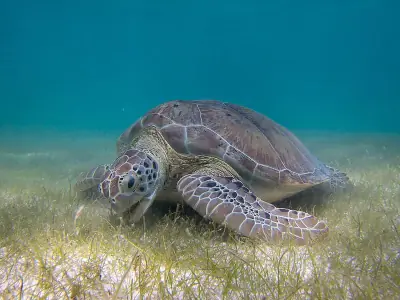 Green Sea Turtle — Head is relatively small compared to body size.
 -
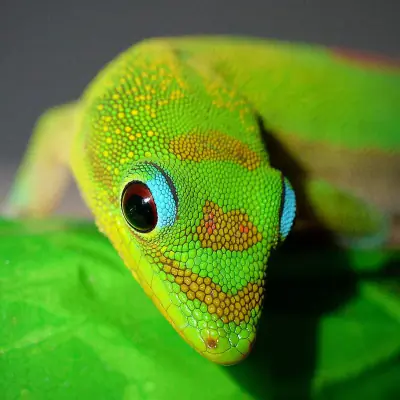 Gold Dust Day Gecko — Red markings may appear on snout and head.
 -
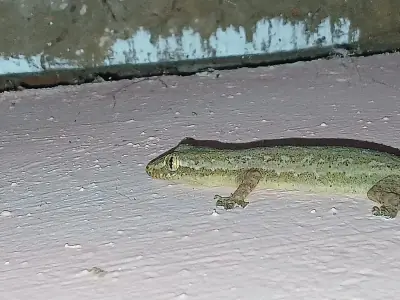 Asian House Gecko — Adhesive toe pads allow climbing smooth surfaces.
 -
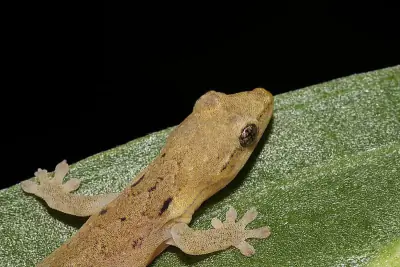 Mourning Gecko — Large eyes and adhesive toe pads are prominent.
Amphibians (1)
-
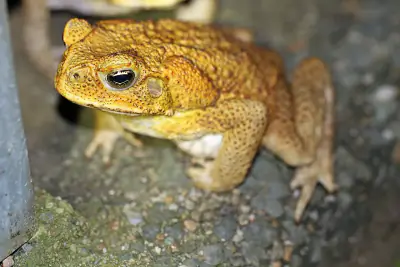 Cane Toad
Insects (4)
-
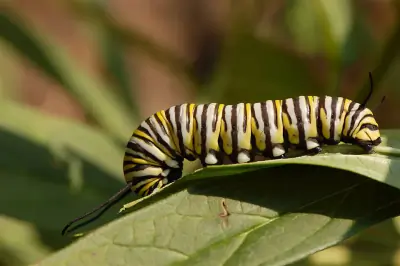 Monarch
 -
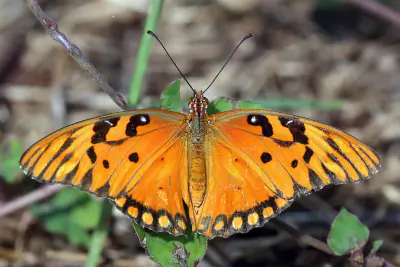 Gulf Fritillary
 -
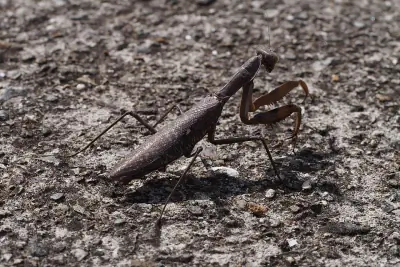 Giant Asian Mantis
 -
 Black Witch
Other Wildlife (20)
-
African Giant Snail
-
Wedgetail Triggerfish
-
Thin-shelled Rock Crab
-
Yellow Tang
-
Moorish Idol
Nature Bingo at Oahu Forest National Wildlife Refuge (SW, 0mi), Honolulu
Can you spot them all? Check off each species as you find it on your visit.
Wildlife Challenge
Botany Challenge
Oahu Forest National Wildlife Refuge (SW, 0mi), Honolulu Climate & Sun
Month-by-month climate and daylight information for Oahu Forest National Wildlife Refuge.
Oahu Forest National Wildlife Refuge experiences Unknown conditions with average temperatures ranging from °F in to °F in .
Climate type: Unknown
| Month | Avg Temp | Precip |
|---|---|---|
| Jan | 0°F | 4.1 in |
| Feb | 0°F | 4.3 in |
| Mar | 0°F | 6.3 in |
| Apr | 0°F | 4.3 in |
| May | 0°F | 3.0 in |
| Jun | 0°F | 2.5 in |
| Jul | 0°F | 4.1 in |
| Aug | 0°F | 3.3 in |
| Sep | 0°F | 4.5 in |
| Oct | 0°F | 4.9 in |
| Nov | 0°F | 4.2 in |
| Dec | 0°F | 7.6 in |
Daylight & Sun Times
Daylight ranges from 10.8 hours in winter to 13.4 hours in summer — a difference of 2.6 hours.
Summer: 4:48 AM – 6:14 PM
Winter: 6:01 AM – 4:51 PM
Oahu Forest National Wildlife Refuge (SW, 0mi), Honolulu Trip Planning & Access
Ready to visit? Here's what to know about getting here and what it'll cost.
Getting to Oahu Forest National Wildlife Refuge means a 2410-mile drive from San Jose, the closest major city.
Visitor Friendliness
Visitor friendliness: families (excellent), dogs (likely_allowed), elderly (highly_suitable).
- Dogs: likely_allowed — No restrictions found
- Families: excellent
- Elderly: highly_suitable
- Strollers: excellent (100/100)
- Beginners: Perfect for beginners (Moderate difficulty (+5), Near urban area - help nearby (+10), Good information available (+5))
- Accessibility: Generally accessible to most visitors (90/100)
Places Near Oahu Forest National Wildlife Refuge (SW, 0mi), Honolulu
If you're in the area, these nearby destinations are worth considering too.
The area around Oahu Forest National Wildlife Refuge includes trails, campgrounds, and other destinations.
Nearby Trails
- Perl Trail, Honouliuli NHS 8.08 mi
- Pacific Historic Parks - Bookstore, HI 8.16 mi
Nearby Campgrounds
- Ymca Camp Erdman, Honolulu 20.46 mi
Nearby Attractions
- Uss Arizona Anchor, Honouliuli NHS 8.08 mi
- The Lone Sailor, Honouliuli NHS 8.08 mi
- Uss Arizona Bell, HI 8.16 mi
Stargazing & Night Sky at Oahu Forest National Wildlife Refuge (SW, 0mi), Honolulu
If you're staying past sunset, the stargazing conditions here are worth planning around.
With Bortle class 1 skies, Oahu Forest National Wildlife Refuge offers Excellent dark-sky site conditions for observing the night sky.
Constellations
Look for Ursa Minor — all visible from this location depending on the season.
-
 Ursa Minor — This compact constellation contains Polaris at the end of its handle, a reliable guide to true north.
Meteor Showers
For meteor viewing, the Geminids (December 13-14) offers the best show at this location.
-
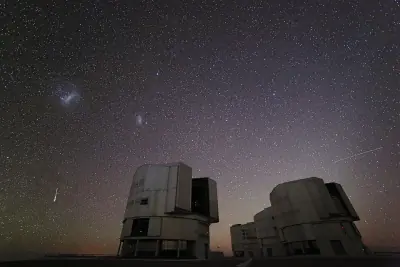 Geminids — peaks December 13-14 (excellent)
Cold December air often means clear skies—look overhead after midnight for bright, slow-moving meteors.
-
 Quadrantids — peaks January 3-4 (good)
Bundle up—January nights are frigid, but dark skies can produce bright fireballs.
-
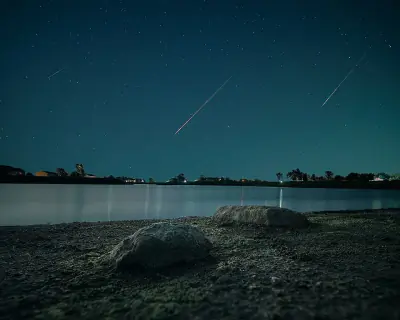 Perseids — peaks August 11-13 (good)
Peak activity typically builds after midnight when Perseus climbs higher.
-
 Eta Aquariids — peaks May 5-6 (good)
Southern U.S. observers often get better rates due to the radiant's position.
-
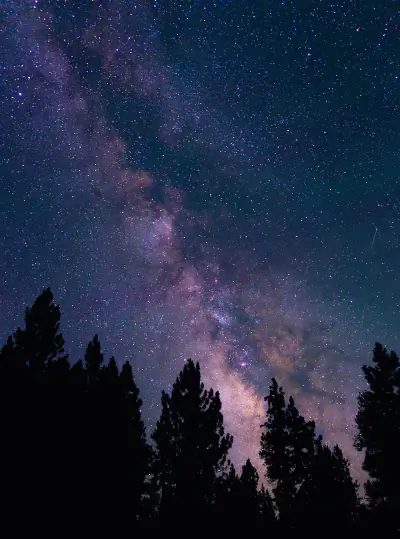 Delta Aquariids — peaks July 28-29 (good)
This steady shower rewards patient observers in dark, moonless conditions.
Planets
Planets visible to the naked eye from this location:
-
 Venus — The brightest planet, often called the Morning or Evening Star
 -
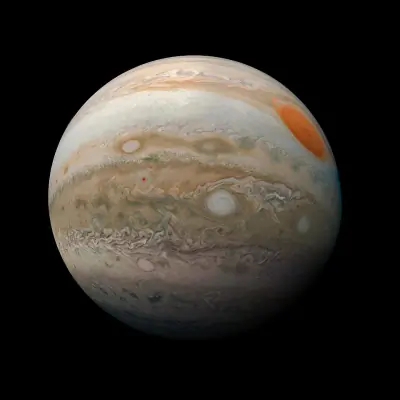 Jupiter — The largest planet, bright and steady in the night sky
 -
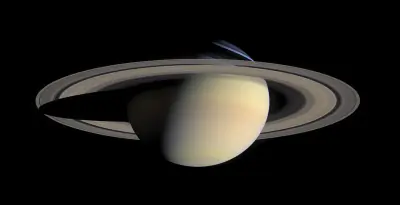 Saturn — Famous for its rings, visible as a golden steady light
 -
 Mars — The Red Planet, recognizable by its reddish-orange hue
Equipment Guide
- Naked eye: Venus, Jupiter, Saturn, Mars, Mercury (with care)
- Binoculars: Jupiter moons, Uranus, Saturn rings (barely)
- Small telescope: Saturn rings, Jupiter bands, Mars surface features, Neptune
Viewing Tips
- Check planets rise/set times for your specific date
- Planets appear along the ecliptic (zodiac path)
- Planets don't twinkle like stars - steady light
- Venus and Jupiter are unmistakable - brightest objects after Moon
- Use a stargazing app to confirm planet positions
- Best viewing: when planet is highest in sky (transit)
Best Viewing Months
- Evening: Oct, Nov, Dec, Jan, Feb
- Morning: Jul, Aug, Sep
Seasonal Highlights at Oahu Forest National Wildlife Refuge (SW, 0mi), Honolulu
Each season brings something different to this area.
What you'll see at Oahu Forest National Wildlife Refuge depends heavily on when you visit.
Indigenous Land at Oahu Forest National Wildlife Refuge (SW, 0mi), Honolulu
Long before trails were marked and campgrounds built, this land was home to Indigenous peoples.
This area is part of the ancestral territory of Nā moku ʻehā.
Territories
Languages
2 Indigenous languages are associated with the peoples of this area: ʻŌlelo Hawaiʻi, Hoailona ʻŌlelo o Hawaiʻi (Hawai’i Sign Language).
Data from Native Land Digital
Oahu Forest National Wildlife Refuge (SW, 0mi), Honolulu Geology & Natural History
Beyond the trails and wildlife, Oahu Forest National Wildlife Refuge sits within a landscape shaped by millions of years of geological processes. Here's what researchers and surveys have documented about this area.
Bedrock Geology
- Rock Type
- Koolau Basalt
- Formation
- Koolau Basalt
- Lithology
- Lava flows; basalt
- Age
- Cenozoic
Endangered Species
- Species at Risk
- 1780
- ESA Endangered
- 149
- ESA Threatened
- 2
- Conservation Score
- 100/100
Temperature Records
- Record High
- 101°F (2003-05-28)
- Record Low
- 14°F (2024-04-10)
Caves & Karst Features
- Feature Types
- Volcanic rocks with potential for pseudokarst
- Karst Score
- 30
Watershed
- Watershed
- Waimea River
- Water Quality (Good)
- 0%
- Impaired
- 0%
Shipwrecks
- Known Wrecks
- 7
- Avg Depth
- 12.2 ft
Oahu Forest National Wildlife Refuge (SW, 0mi), Honolulu Safety & Conditions
Conditions change fast outdoors — bookmark these official sources for your visit.
Real-time safety data for Oahu Forest National Wildlife Refuge — weather, fire, flood, and road conditions.
Coordinates: 21.484287, -157.92276