Workman Creek (fr 487 & Sr 288), Gila
Day Use Areas in Arizona
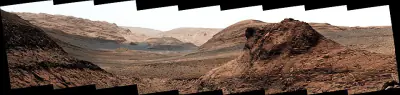
Photo: April Nobile / CC BY 4.0
Near Roosevelt, AZ in Arizona
What to Pack for Workman Creek (fr 487 & Sr 288), Gila
Pack with the terrain and wildlife in mind, and you'll be ready for anything here.
A well-prepared pack for Workman Creek (fr 487 & Sr 288) covers 3 categories: essential, wildlife gear, terrain gear.
Essential
-
Water (minimum 2L) — Even cool-weather hiking demands steady hydration, as exertion and altitude increase water loss faster than most expect.
-
Navigation (map/GPS/compass) — Even well-marked trails have confusing junctions, especially in fog or snow; a GPS unit or downloaded map keeps you on route.
-
Sun protection (sunglasses, sunscreen) — Quality sunglasses prevent snow blindness and reduce eye strain during long days on exposed trails or ridgelines.
-
First aid kit — Adhesive bandages, antiseptic, and athletic tape handle the most common trail injuries and weigh under a pound.
-
Extra food — Blood sugar drops fast during sustained effort outdoors, and having a reserve keeps your body and mind sharp.
-
Headlamp with extra batteries — Batteries drain faster in cold weather; carrying spares ensures you won't be left in the dark when you need light most.
-
Fire starter — Starting a fire boosts morale and provides light, warmth, and a way to purify water in an emergency.
-
Emergency shelter (space blanket) — If an injury forces you to stop moving, a reflective blanket prevents the rapid heat loss that leads to hypothermia.
-
Knife or multi-tool — In a survival situation, a blade lets you process tinder, build shelter, and prepare food.
-
Extra clothing layer — Wet clothing accelerates cooling; a dry backup layer can prevent hypothermia when conditions turn.
Wildlife Gear
-
Hiking buddy (avoid solo) — Solo hikers are more vulnerable to predatory behavior from mountain lions, which typically avoid groups.
-
Noise maker — A loud whistle doubles as a rescue signal, serving both wildlife safety and emergency communication.
-
Gaiters — Beyond snakes, gaiters also protect against thorns, brush, and ticks in overgrown trail sections.
-
First-aid snakebite kit — A lightweight pressure bandage and marker for tracking swelling take up minimal space but provide critical aid.
Terrain Gear
-
SPF50 lip balm — Reapply every 2 hours and after eating or drinking, as lip balm wears off faster than body sunscreen.
Seasonal Gear
- Spring: Camera, Wildflower field guide
- Fall: Camera, Binoculars (foliage viewing)
- Winter: Microspikes/traction devices
Activities & Best Time to Visit Workman Creek (fr 487 & Sr 288), Gila
The Forest terrain here lends itself to a range of outdoor activities throughout the year.
The mix of Forest terrain and Temperate conditions here supports everything from fishing, photography, picnicking.
The scenery here earns a 55/100 photography rating — Good dark sky (Bortle 4) and 3 excellent meteor showers.
Activities
-
fishing — Check local regulations and seasons before heading out.
-
photography — Outdoor photography invites you to slow down and frame the beauty around you.
-
picnicking — Whether lakeside or in a meadow, it's a relaxed way to savor both the setting and the company.
-
walking — Perfect for all ages, a casual walk can turn any outdoor space into a relaxing nature experience.
-
wildlife_viewing — Bring binoculars and patience — nature often rewards careful, respectful observers.
Best months: May, Jun, Jul, Aug, Sep
Terrain: Forest — Expect cooler temperatures and higher humidity under tree cover. Wildlife habitat is abundant, especially in mixed hardwood or conifer stands.
Wildlife Safety at Workman Creek (fr 487 & Sr 288), Gila
Before heading out, it helps to know which wildlife to be cautious around.
The danger score of 25/10 at Workman Creek (fr 487 & Sr 288) accounts for Mountain lions, Venomous snakes, Far from city (71mi) in the area.
- Mountain lions
- Venomous snakes
- Far from city (71mi)
- Good dark sky (Bortle 4)
- 3 excellent meteor showers
- Fall foliage
- Spring wildflowers
Venomous Snakes
0 venomous snake species are found in this area: .
- Watch where you step and place hands
- Stay on trails
- Wear boots and long pants in snake country
- Do not reach under rocks or logs
- If bitten: stay calm, immobilize limb, seek medical help immediately
- Do NOT: cut wound, suck venom, apply tourniquet, ice, or alcohol
Nature & Wildlife at Workman Creek (fr 487 & Sr 288), Gila
The Forest terrain here supports a rich ecosystem worth noticing as you explore.
The ecosystem around Workman Creek (fr 487 & Sr 288) is defined by its Forest landscape, supporting everything from Arizona sycamore to Red-winged Blackbird and House Sparrow.
Trees (1)
-
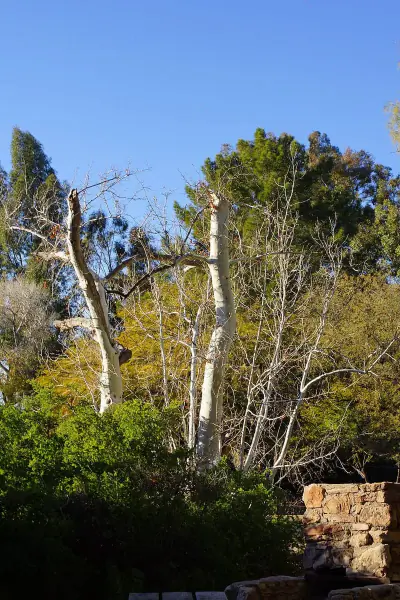 Arizona sycamore — Trunks may become massive near the base.
Wildflowers (4)
-
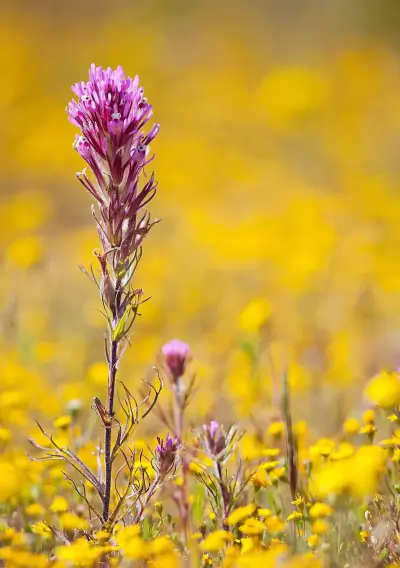 purple owl's-clover — Showy clusters blending bracts and small flowers.
 -
 pinkflower hedgehog cactus — Low-growing cactus forming rounded clusters.
 -
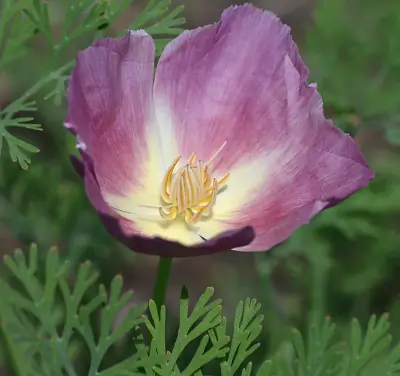 California poppy — Four-petaled blooms that close at night or in cool weather.
 -
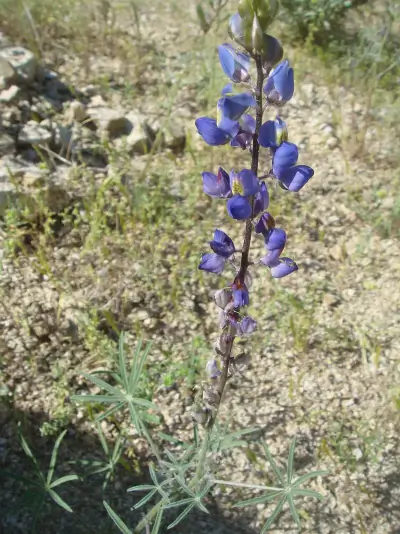 Coulter's lupine — It blooms in spring.
Shrubs (3)
-
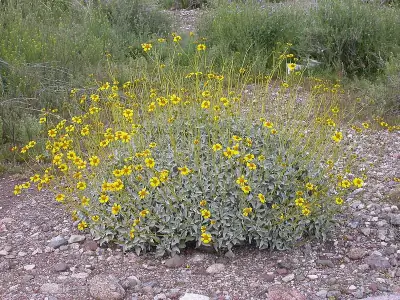 Brittlebush — Leaves are soft and pale gray, contrasting with long-stemmed golden blooms.
 -
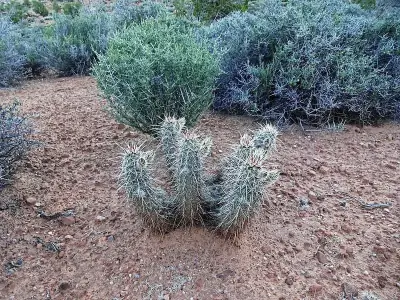 Engelmann's Hedgehog Cactus — Adapted to desert heat, this cactus stores water in thick stems and tolerates prolonged drought.
 -
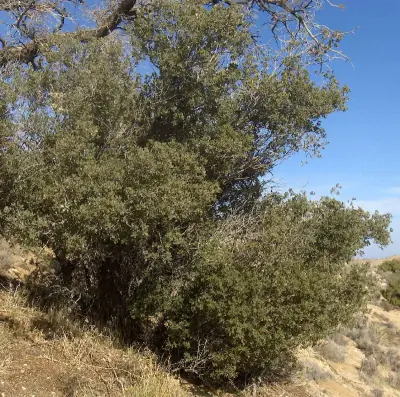 Sonoran scrub oak — The plant forms thickets in arid landscapes.
Other Plants (5)
-
saguaro
-
Buckhorn Cholla
-
jojoba
-
Panamint liveforever
-
ocotillo
Mammals (1)
-
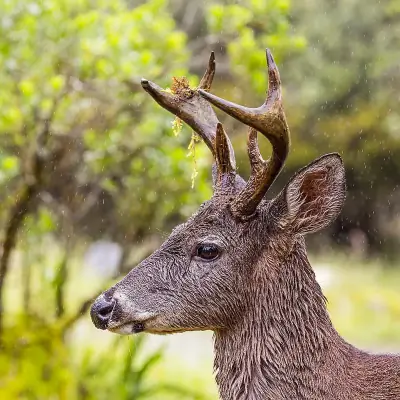 White-tailed Deer — Bucks grow antlers annually, shedding them each winter.
Birds (30)
-
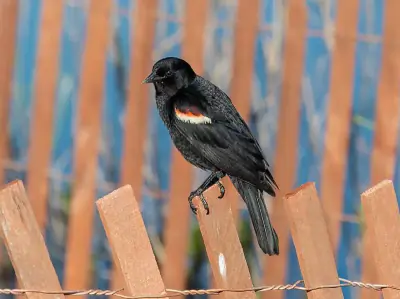 Red-winged Blackbird — Glossy breeding male plumage
 -
 House Sparrow — Urban plumage often dusted and worn
 -
 European Starling — Sleek dark breeding plumage with yellow bill
 -
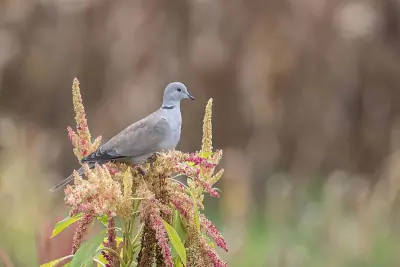 Eurasian Collared-Dove — Squared tail with white tips
 -
 Dark-eyed Junco — Pink-sided form with pale gray and buff flanks
Reptiles (7)
-
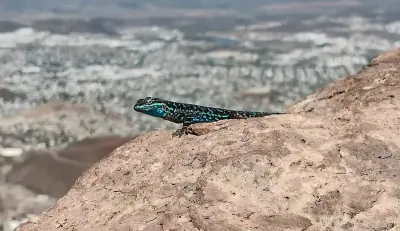 Ornate Tree Lizard — Typically 4–6 inches long.
 -
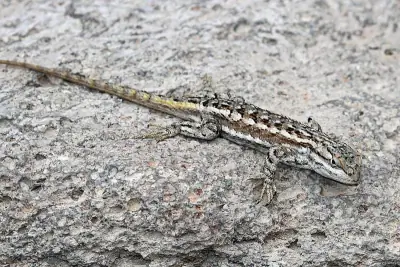 Plateau Fence Lizard — Usually 5–7 inches long including tail.
 -
 Western Diamond-backed Rattlesnake — Adults commonly 3–5 feet long.
 -
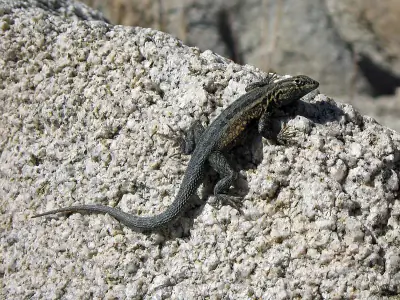 Common Side-blotched Lizard — Typically 4–6 inches long including the tail.
 -
 Greater Short-horned Lizard — Typically under 5 inches long.
Amphibians (3)
-
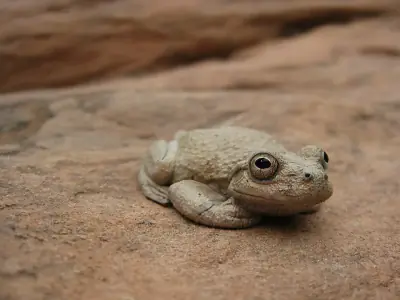 Canyon Tree Frog
 -
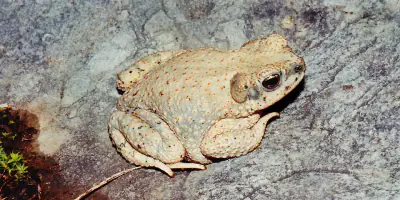 Red-spotted Toad
 -
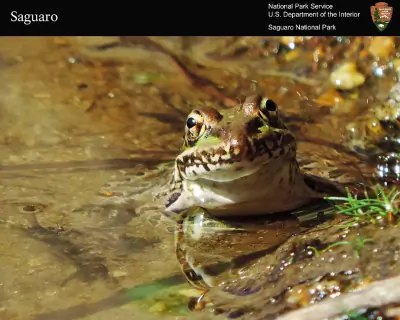 Lowland Leopard Frog
Insects (6)
-
 Pipevine Swallowtail
 -
 Queen
Queen -
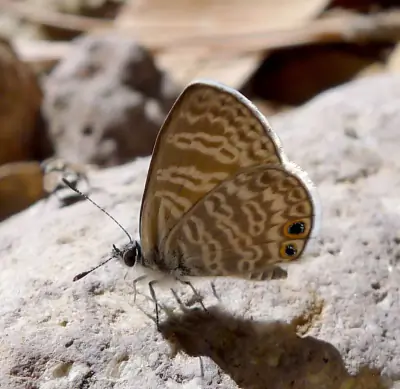 Marine Blue
 -
 Gray Buckeye
 -
 Dainty Sulphur
Other Wildlife (1)
-
Desert Blonde Tarantula
Nature Bingo at Workman Creek (fr 487 & Sr 288), Gila
Can you spot them all? Check off each species as you find it on your visit.
Wildlife Challenge
Botany Challenge
Workman Creek (fr 487 & Sr 288), Gila Climate & Sun
The numbers behind the best (and worst) times to visit Workman Creek (fr 487 & Sr 288).
Month-by-month temperatures at Workman Creek (fr 487 & Sr 288) range from °F to °F.
Climate type: Temperate
Annual avg temp: 51.3°F
Annual precipitation: 31.2 in
With an average annual temperature of 51.3°F and 31.2 inches of precipitation, Workman Creek (fr 487 & Sr 288) has mild, moderate rainfall conditions. Summer highs average around 68°F, while winter lows drop to 37°F.
Best months to visit: May, Jun, Jul, Sep, Oct.
| Month | Avg Temp | Precip |
|---|---|---|
| Jan | 37°F | 4.6 in |
| Feb | 38°F | 4.0 in |
| Mar | 42°F | 3.8 in |
| Apr | 48°F | 1.0 in |
| May | 56°F | 0.6 in |
| Jun | 65°F | 0.3 in |
| Jul | 68°F | 2.9 in |
| Aug | 67°F | 3.4 in |
| Sep | 62°F | 2.0 in |
| Oct | 53°F | 1.8 in |
| Nov | 44°F | 2.4 in |
| Dec | 36°F | 4.4 in |
Daylight & Sun Times
Daylight ranges from 9.9 hours in winter to 14.4 hours in summer — a difference of 4.5 hours.
Summer: 5:12 AM – 7:35 PM
Winter: 7:21 AM – 5:16 PM
Workman Creek (fr 487 & Sr 288), Gila Trip Planning & Access
Time to plan the details — access, cost, and travel information for your visit.
Access to Workman Creek (fr 487 & Sr 288) is primarily via Phoenix, 71 miles away.
Visitor Friendliness
Accessibility: dog-friendly (likely_allowed), family-friendly (excellent), elderly-friendly (highly_suitable).
- Dogs: likely_allowed — No restrictions found
- Families: excellent
- Elderly: highly_suitable
- Strollers: excellent (100/100)
- Beginners: Perfect for beginners (Easy difficulty - perfect for beginners (+20))
- Accessibility: Generally accessible to most visitors (100/100)
Places Near Workman Creek (fr 487 & Sr 288), Gila
Looking for more? Here's what else is close by.
The region around Workman Creek (fr 487 & Sr 288) is rich with options — 18 nearby destinations are worth exploring.
Nearby Trails
- Abbeys Way, Gila 0.12 mi
- Reynolds Creek Trail, Gila 1.57 mi
- Parker Creek Trail, Gila 2.15 mi
- Murphy Trail, Gila 2.18 mi
- Center Mountain Trail, Gila 3.24 mi
Nearby Campgrounds
- Rose Creek Campground, Gila 3.22 mi
- Reynolds Creek Campground, Gila 4.84 mi
- Reynolds Creek Group Campground (N, 0mi), Gila 4.99 mi
- Schoolhouse Campground (az) (N, 0mi), Gila 12.39 mi
- Schoolhouse Cg Campground, Gila 12.47 mi
Nearby Attractions
Stargazing & Night Sky at Workman Creek (fr 487 & Sr 288), Gila
Clear nights in this area reveal more stars than most people expect.
Light pollution at Workman Creek (fr 487 & Sr 288) is Rural/suburban transition (Bortle 4), which means bright constellations and planets are visible.
Constellations
Key constellations visible from this latitude include Ursa Minor, Cepheus.
-
 Ursa Minor — Visible throughout the year in much of the United States, Ursa Minor rotates steadily around the North Celestial Pole.
 -
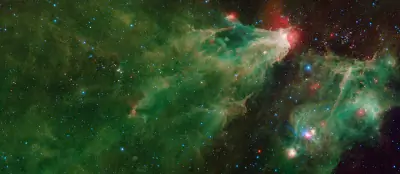 Cepheus — Though its stars are modest in brightness, Cepheus is visible year-round from most of the U.S.
Meteor Showers
The Geminids peaks around December 13-14 and is the best meteor shower visible from here.
-
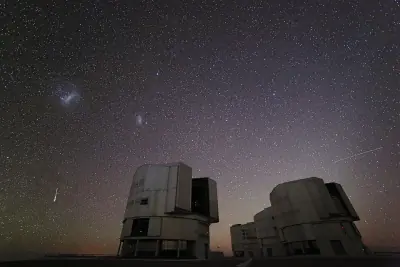 Geminids — peaks December 13-14 (excellent)
Find a dark location away from city lights and give your eyes 20–30 minutes to adjust for peak rates.
-
 Quadrantids — peaks January 3-4 (excellent)
Look toward the northern sky after midnight for the highest activity.
-
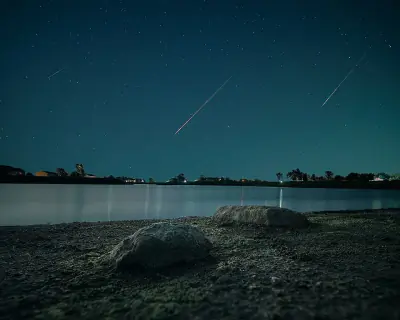 Perseids — peaks August 11-13 (excellent)
Expect fast, bright meteors and occasional fireballs under dark skies.
-
 Eta Aquariids — peaks May 5-6 (good)
Plan for early morning viewing; activity increases in the hours just before sunrise.
-
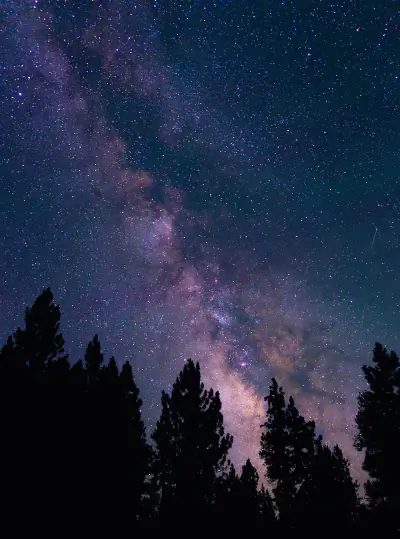 Delta Aquariids — peaks July 28-29 (fair)
Southern states often see stronger activity due to radiant placement.
Planets
Planets visible to the naked eye from this location:
-
 Venus — The brightest planet, often called the Morning or Evening Star
 -
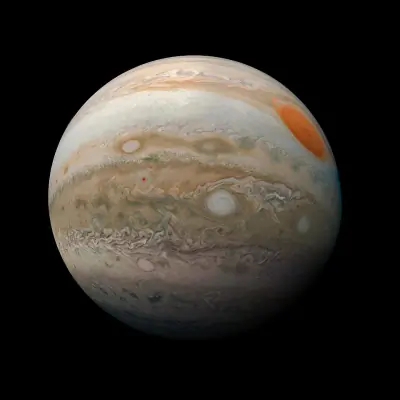 Jupiter — The largest planet, bright and steady in the night sky
 -
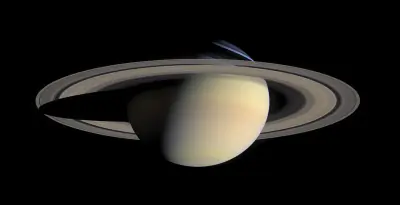 Saturn — Famous for its rings, visible as a golden steady light
 -
 Mars — The Red Planet, recognizable by its reddish-orange hue
Equipment Guide
- Naked eye: Venus, Jupiter, Saturn, Mars, Mercury (with care)
- Binoculars: Jupiter moons, Uranus, Saturn rings (barely)
- Small telescope: Saturn rings, Jupiter bands, Mars surface features, Neptune
Viewing Tips
- Check planets rise/set times for your specific date
- Planets appear along the ecliptic (zodiac path)
- Planets don't twinkle like stars - steady light
- Venus and Jupiter are unmistakable - brightest objects after Moon
- Use a stargazing app to confirm planet positions
- Best viewing: when planet is highest in sky (transit)
Best Viewing Months
- Evening: Oct, Nov, Dec, Jan, Feb
- Morning: Jul, Aug, Sep
Seasonal Highlights at Workman Creek (fr 487 & Sr 288), Gila
What you'll encounter here shifts with the calendar — here's a seasonal overview.
Seasonal changes at Workman Creek (fr 487 & Sr 288) bring — each offering a distinct experience.
Spring Wildflowers
Peak bloom: March - April
Check local park websites for bloom reports
Fall Foliage
Peak color: October 15 – November 5
Best trees for color: Maple, Oak, Aspen
Higher elevations peak 1-2 weeks earlier
Bird Migration
Spring peak: March - April
Fall peak: October - November
Best spots: Wetlands, coastlines, mountain ridges
Indigenous Land at Workman Creek (fr 487 & Sr 288), Gila
The history of this land reaches back long before it became a recreation destination.
We acknowledge that Workman Creek (fr 487 & Sr 288) is located on the traditional lands of Pueblos, Ndee/Nnēē: (Western Apache), Hohokam.
Territories
Languages
The languages traditionally spoken in this area include Dilzhę́’é (South).
Data from Native Land Digital
Workman Creek (fr 487 & Sr 288), Gila Geology & Natural History
Beyond the trails and wildlife, Workman Creek (fr 487 & Sr 288) sits within a landscape shaped by millions of years of geological processes. Here's what researchers and surveys have documented about this area.
Bedrock Geology
- Rock Type
- Middle Proterozoic sedimentary rocks
- Formation
- Grand Canyon Supergroup; Chuar Group; Unkar Group; Apache Group; Troy Quartzite
- Lithology
- Major:{shale,sandstone,quartzite}, Minor:{limestone,basalt,black shale}, Incidental:{conglomerate}
- Age
- Proterozoic
Fossils
- Fossil Occurrences
- 3
- Unique Species
- 3
- Oldest
- 382.3 million years ago
Mineral Deposits
- Deposit Sites
- 178
- Richness
- Exceptional
- Minerals Found
- Asbestos, Uranium, Iron, Copper, Sand and Gravel, Construction, Fluorine-Fluorite, Semiprecious Gemstone
Endangered Species
- Species at Risk
- 1478
- ESA Endangered
- 29
- ESA Threatened
- 16
- Conservation Score
- 100/100
Temperature Records
- Record High
- 108°F (1905-07-28)
- Record Low
- -21°F (1979-01-30)
Wildfire History
This area has a relatively low wildfire risk, but always follow posted fire regulations.
- Recorded Fires
- 19
- Largest Fire
- Juniper (30,643.6 acres)
- Most Recent
- 2024
- Fire Risk
- Extreme
Caves & Karst Features
- Feature Types
- Carbonate rocks at or near the land surface in a humid climate
- Karst Score
- 40
Watershed
- Watershed
- Sloan Creek
- Water Quality (Good)
- 0%
- Impaired
- 0%
Reported Phenomena
- Bigfoot Reports
- 1 (BFRO)
- Eeriness Score
- 8/100
Workman Creek (fr 487 & Sr 288), Gila Safety & Conditions
Plans set? Check the latest conditions before you head out.
Up-to-date weather, fire, and flood information for the area around Workman Creek (fr 487 & Sr 288).
Coordinates: 33.814448, -110.925573