Upper East Eagle Trailhead (#33), Greenlee
Trailheads in Arizona
What to Pack for Upper East Eagle Trailhead (#33), Greenlee
Given these conditions, here's what to pack for a safe and comfortable visit.
The right gear turns potential problems into non-issues. Here's what Upper East Eagle Trailhead (#33) demands.
Essential
-
Water (minimum 2L) — Dehydration impairs judgment and endurance long before you feel thirsty; 2L is the minimum for a moderate day hike.
-
Navigation (map/GPS/compass) — Phone batteries die, cell service disappears, and trail signs get vandalized; a paper map and compass always work.
-
Sun protection (sunglasses, sunscreen) — UV exposure intensifies at elevation and near reflective surfaces like water and snow; sunburn can happen in under 30 minutes.
-
First aid kit — Blisters, cuts, and sprains happen on even the easiest trails; basic supplies let you treat problems before they force a retreat.
-
Extra food — A wrong turn or unexpected storm can extend any outing by hours; extra calories prevent fatigue and poor decision-making.
-
Headlamp with extra batteries — Trails that seem short in daylight can take twice as long with route-finding or elevation; a headlamp keeps you moving safely after dark.
-
Fire starter — Hypothermia can set in even during summer at higher elevations; a reliable fire starter provides warmth and a signal for rescuers.
-
Emergency shelter (space blanket) — A space blanket weighs under two ounces and reflects up to 90% of body heat, buying time in an unplanned overnight.
-
Knife or multi-tool — From cutting cord to preparing food to improvising gear repairs, a knife is the most versatile tool you can carry.
-
Extra clothing layer — Mountain weather can shift from sunshine to sleet within an hour; an extra layer prevents dangerous heat loss.
Wildlife Gear
-
Hiking buddy (avoid solo) — Groups of three or more are almost never involved in serious bear incidents; larger groups make more noise and appear more intimidating.
-
Noise maker — Clapping, whistling, or using an air horn warns wildlife of your approach, preventing surprise encounters on blind corners.
-
Gaiters — Snake-proof gaiters provide a physical barrier against venomous bites below the knee, where most strikes occur.
-
First-aid snakebite kit — While evacuation to a hospital is the priority, a snakebite kit helps you stay calm and follow proper first-aid protocols.
Terrain Gear
-
Wide-brim hat — A wide brim shades your face, ears, and neck simultaneously, reducing UV exposure and lowering heat stroke risk.
-
Sunscreen SPF50+ — Reflected UV from water, sand, and snow can burn exposed skin even on overcast days; SPF50+ blocks 98% of UVB rays.
-
Extra water (desert) — Desert water sources are unreliable and often seasonal; carry all the water you need rather than counting on finding more.
Seasonal Gear
- Spring: Camera, Wildflower field guide
- Fall: Camera, Binoculars (foliage viewing)
Activities & Best Time to Visit Upper East Eagle Trailhead (#33), Greenlee
The Desert terrain here lends itself to a range of outdoor activities throughout the year.
Upper East Eagle Trailhead (#33) draws visitors for hiking, but the 6 available activities mean there's more here than most expect.
Photographers rate this area 65/100, with Exceptional dark sky (Bortle 1-2) and 3 excellent meteor showers being a major draw.
Activities
-
hiking — Follow marked trails through forests, deserts, or alpine terrain for a deeper connection with nature.
-
photography — Capture landscapes, wildlife, and changing light across trails, coastlines, and mountain vistas.
-
picnicking — Spread a blanket, unpack a meal, and enjoy food outdoors surrounded by fresh air and open views.
-
running — Hit scenic trails or park loops for a workout surrounded by fresh air and open space.
-
walking — A simple way to explore trails, shorelines, and park paths at your own pace while taking in the scenery.
-
wildlife_viewing — Observe animals in their natural habitats, from grazing deer to soaring raptors overhead.
Best months: May, Jun, Jul, Aug, Sep
Terrain: Desert — Desert terrain features sparse vegetation, exposed soils, and wide temperature swings between day and night.
Wildlife Safety at Upper East Eagle Trailhead (#33), Greenlee
While the wildlife here is part of the experience, some species require caution and preparation.
Awareness is the best safety tool at Upper East Eagle Trailhead (#33). Here are the wildlife considerations for this area.
- Mountain lions
- Venomous snakes
- Remote (159mi from city)
- Exceptional dark sky (Bortle 1-2)
- 3 excellent meteor showers
- Fall foliage
- Spring wildflowers
Venomous Snakes
Venomous snakes here include Western Diamondback, Mojave, Sidewinder, Arizona Coral Snake. They're most active during warm months.
A heavy-bodied rattlesnake with bold diamond-shaped blotches along the back and a black-and-white banded tail ending in a rattle.
Seek emergency medical care immediately and keep the bitten limb immobilized at heart level.
A large rattlesnake with diamond-like dorsal blotches and a banded tail similar to the Western Diamondback.
Call emergency services immediately and limit movement to slow venom spread.
A small pale rattlesnake with horn-like scales above each eye and a sidewinding mode of travel.
Seek immediate medical attention and immobilize the affected limb.
A small slender snake with red, yellow, and black rings around the body.
Seek emergency medical care immediately.
- Watch where you step and place hands
- Stay on trails
- Wear boots and long pants in snake country
- Do not reach under rocks or logs
- If bitten: stay calm, immobilize limb, seek medical help immediately
- Do NOT: cut wound, suck venom, apply tourniquet, ice, or alcohol
Nature & Wildlife at Upper East Eagle Trailhead (#33), Greenlee
The Desert terrain here supports a rich ecosystem worth noticing as you explore.
11 bird species have been documented near Upper East Eagle Trailhead (#33), alongside 7 mammals and a rich variety of native plants.
Trees (2)
-
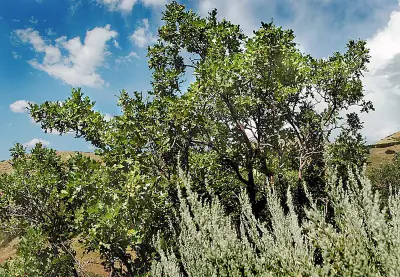 Gambel Oak — It often grows in dense thickets, spreading by underground sprouts to form large colonies.
 -
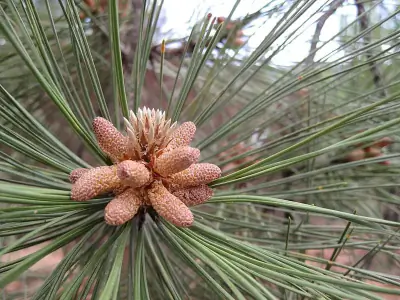 Southwestern Ponderosa Pine — Its thick bark forms broad orange plates separated by dark fissures.
Wildflowers (6)
-
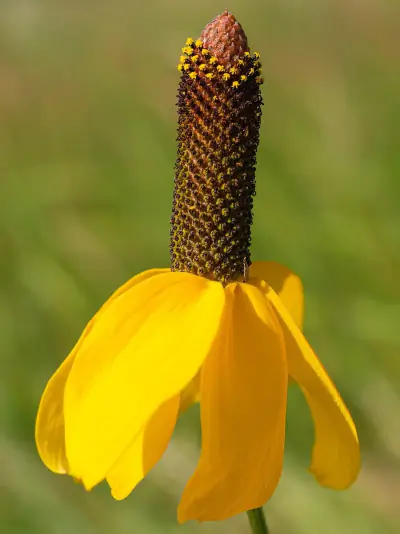 upright prairie coneflower — Tall central cone surrounded by drooping yellow rays.
 -
 Woods' rose — Pink five-petaled flowers with yellow centers.
 -
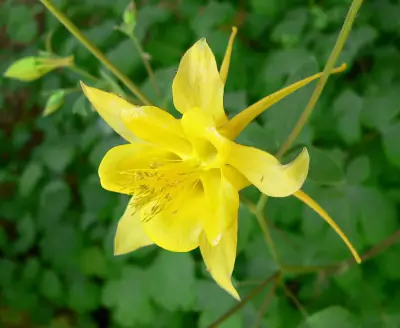 golden columbine — Bright yellow nodding flowers with long straight spurs.
 -
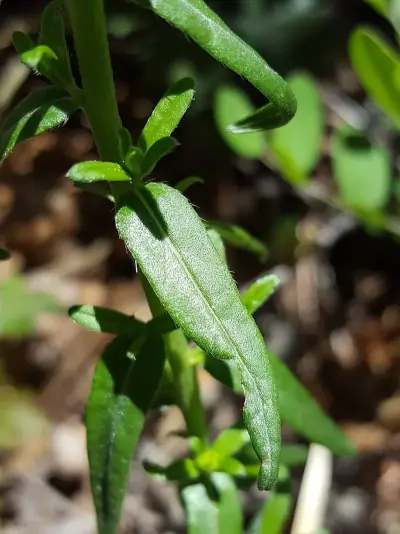 manyflowered gromwell — Clusters of small yellow tubular flowers.
 -
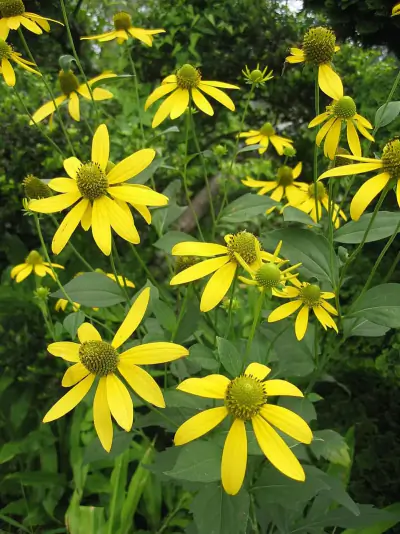 cutleaf coneflower — Tall stems with drooping yellow rays and greenish cones.
Other Plants (5)
-
western blue flag
-
Scarlet Gilia
-
great mullein
-
MacDougal verbena
-
scarlet cinquefoil
Mammals (7)
-
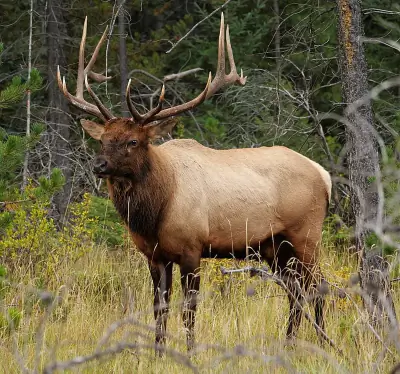 Wapiti — Also known as elk, this large deer has a tan body with dark neck and pale rump patch.
 -
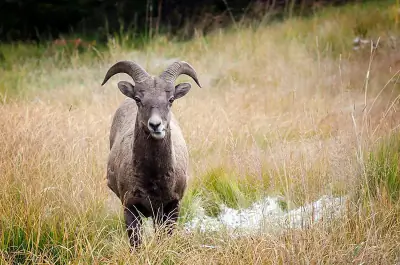 Bighorn Sheep — Stocky mountain sheep with tan coat and white rump.
 -
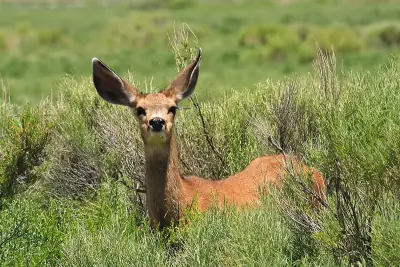 Mule Deer — A large deer with oversized mule-like ears and a black-tipped tail.
 -
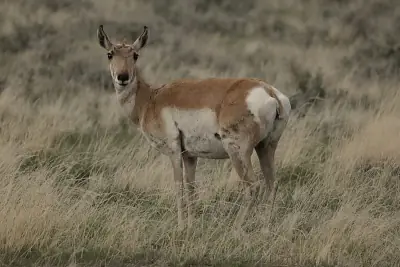 Pronghorn — A slender tan-and-white ungulate with distinctive black facial markings.
 -
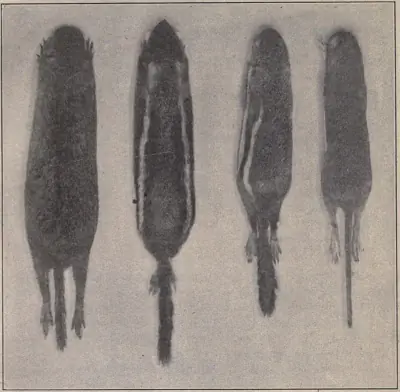 Common Golden-mantled Ground Squirrel — Chipmunk-like rodent with golden shoulders and white eye ring.
Birds (11)
-
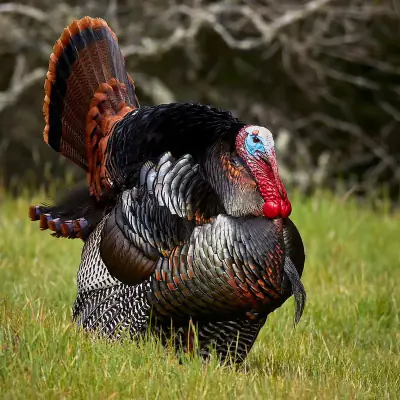 Wild Turkey — Large dark bird with iridescent bronze sheen
 -
 Canada Goose — Large brown waterfowl with black neck and white chinstrap
 -
 Dark-eyed Junco — Slate-gray form with white belly
 -
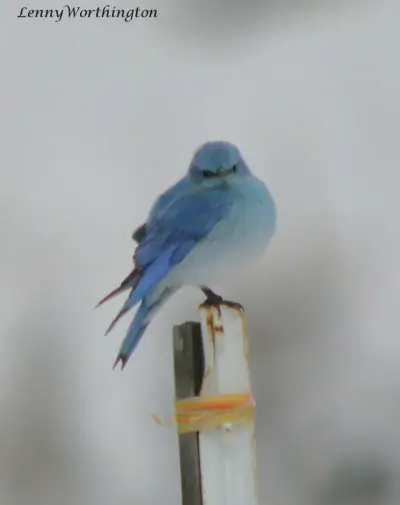 Mountain Bluebird — Bright sky-blue male
 -
 Bufflehead — Small duck with large white head patch
Reptiles (5)
-
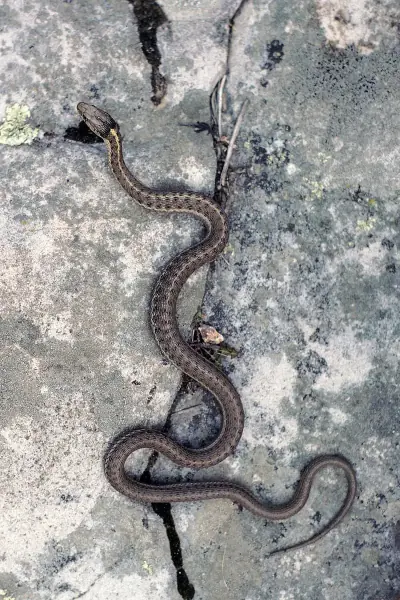 Western Terrestrial Garter Snake — A slender snake with longitudinal yellow or cream stripes over a dark brown, gray, or greenish body.
 -
 Greater Short-horned Lizard — A stout-bodied lizard with short horns on the back of the head.
 -
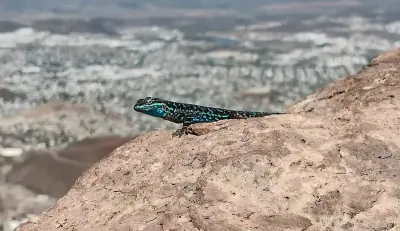 Ornate Tree Lizard — A small spiny lizard with gray to brown coloration and subtle patterning.
 -
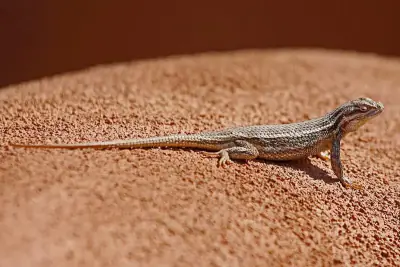 Southwestern Fence Lizard — A medium-sized spiny lizard with gray to brown coloration and dark crossbands.
 -
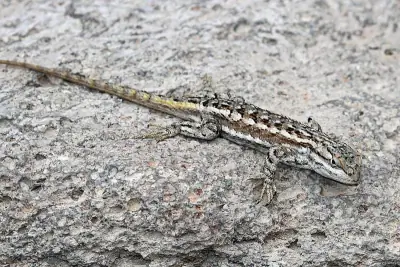 Plateau Fence Lizard — A medium lizard with spiny scales and gray to brown coloration.
Amphibians (3)
-
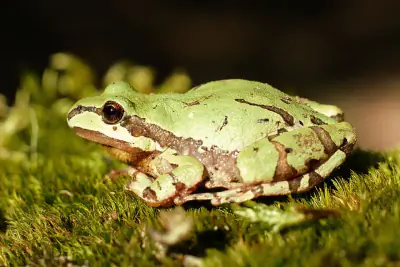 Arizona Tree Frog
 -
 Western Tiger Salamander
 -
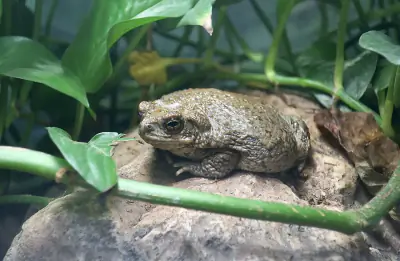 Arizona Toad
Insects (12)
-
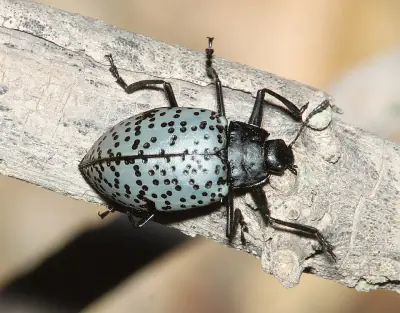 Blue Fungus Beetle
 -
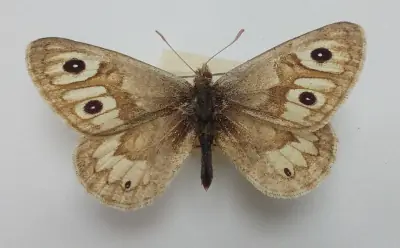 Ridings' Satyr
 -
Nokomis Fritillary
-
 Common Ringlet
 -
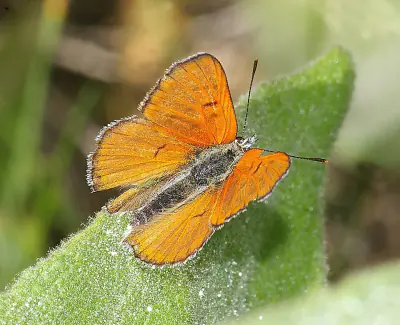 Ruddy Copper
Fungi (6)
-
 lobster mushroom
 -
Barrow's Bolete
-
 Kaibab Jack
 -
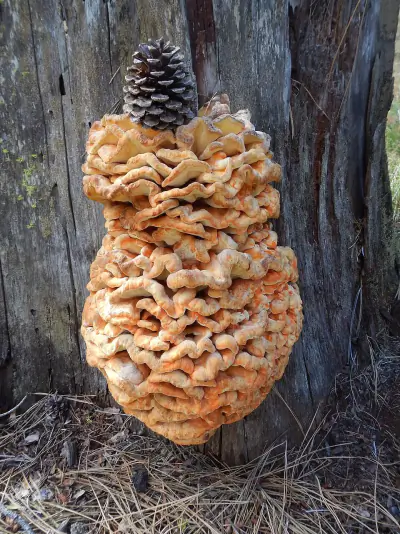 Spring Polypore
 -
Floccularia albolanaripes
Other Wildlife (1)
-
Speckled Dace
Nature Bingo at Upper East Eagle Trailhead (#33), Greenlee
Can you spot them all? Check off each species as you find it on your visit.
Wildlife Challenge
Botany Challenge
Upper East Eagle Trailhead (#33), Greenlee Climate & Sun
For detailed planning, here's the climate data for this area.
The weather at Upper East Eagle Trailhead (#33) follows a Temperate pattern — here's the monthly breakdown.
Climate type: Temperate
Annual avg temp: 50.9°F
Annual precipitation: 20.2 in
With an average annual temperature of 50.9°F and 20.2 inches of precipitation, Upper East Eagle Trailhead (#33) has mild, moderate rainfall conditions. Summer highs average around 68°F, while winter lows drop to 35°F.
Best months to visit: May, Jun, Sep, Oct.
| Month | Avg Temp | Precip |
|---|---|---|
| Jan | 35°F | 1.6 in |
| Feb | 37°F | 1.4 in |
| Mar | 42°F | 1.2 in |
| Apr | 48°F | 0.6 in |
| May | 56°F | 0.6 in |
| Jun | 66°F | 0.5 in |
| Jul | 68°F | 3.4 in |
| Aug | 66°F | 3.8 in |
| Sep | 61°F | 2.2 in |
| Oct | 52°F | 1.7 in |
| Nov | 43°F | 1.4 in |
| Dec | 35°F | 1.8 in |
Daylight & Sun Times
Daylight ranges from 9.9 hours in winter to 14.4 hours in summer — a difference of 4.5 hours.
Summer: 5:06 AM – 7:28 PM
Winter: 7:13 AM – 5:10 PM
Upper East Eagle Trailhead (#33), Greenlee Trip Planning & Access
Planning your trip to Upper East Eagle Trailhead (#33) — here's the practical information you'll need.
From Phoenix, Upper East Eagle Trailhead (#33) is a drive covering 159 miles.
Visitor Friendliness
This location rates likely_allowed for dogs, moderate for families, and challenging for elderly visitors.
- Dogs: likely_allowed — No restrictions found
- Families: moderate (Long distance (>5mi), Steep climb (>1000ft))
- Elderly: challenging (Long distance (>2mi), Significant elevation (>200ft), Unpaved surface)
- Strollers: not_recommended (20/100)
- Beginners: Good starting point (Moderate difficulty (+5))
- Accessibility: Generally accessible to most visitors (90/100)
Places Near Upper East Eagle Trailhead (#33), Greenlee
There's more to explore in this part of Arizona.
Here's what else is nearby if you want to expand your itinerary beyond Upper East Eagle Trailhead (#33).
Nearby Trails
- Lengthy Canyon Trail, Greenlee 0.3 mi
- Hagan Corral Trail, Greenlee 1.89 mi
- Raspberry Trail, Greenlee 2.01 mi
- Crabtree Trail, Greenlee 2.27 mi
Nearby Campgrounds
- Strayhorse Cg Campground, Greenlee 2.01 mi
- Kp Cienega Cg Campground, Greenlee 4.52 mi
- Hannagan Cg Campground, Greenlee 7.94 mi
- Honeymoon Campground (N, 0mi), Greenlee 10.31 mi
- Caldwell Cabin Campground, Apache 15.85 mi
Stargazing & Night Sky at Upper East Eagle Trailhead (#33), Greenlee
Once you're geared up and settled in, the night sky here offers its own rewards.
Upper East Eagle Trailhead (#33) sits under Bortle class 2 skies — Typical truly dark site for stargazing in Arizona.
Constellations
From Upper East Eagle Trailhead (#33), you can trace Ursa Minor, Cepheus across the sky on clear nights.
-
 Ursa Minor — Home to Polaris, the North Star, Ursa Minor forms a small dipper shape that circles the northern sky year-round.
 -
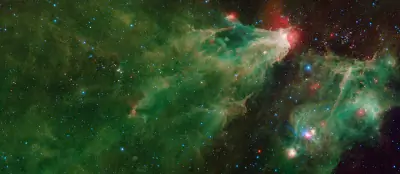 Cepheus — Cepheus appears as a faint house-shaped pattern near Polaris in the northern sky.
Meteor Showers
Time your visit around December 13-14 for the Geminids, the strongest meteor shower visible from this latitude.
-
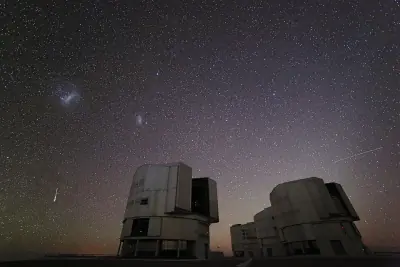 Geminids — peaks December 13-14 (excellent)
One of the most reliable and active showers of the year; best viewed after 10 PM when Gemini rises higher in the sky.
-
 Quadrantids — peaks January 3-4 (excellent)
This brief but intense shower peaks before dawn; early morning hours offer the best chance to see multiple meteors.
-
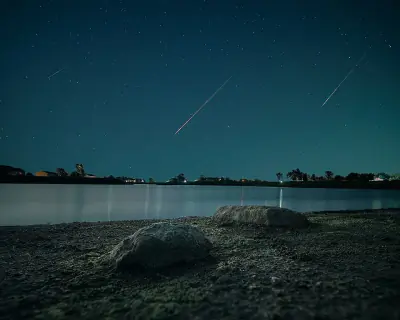 Perseids — peaks August 11-13 (excellent)
A summer favorite with warm nighttime viewing; look northeast after 10 PM.
-
 Eta Aquariids — peaks May 5-6 (good)
Best seen before dawn in the southeastern sky as Aquarius rises.
-
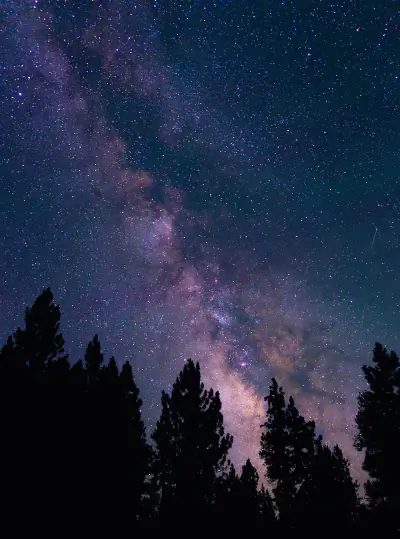 Delta Aquariids — peaks July 28-29 (fair)
Best viewed after midnight when Aquarius is higher in the southern sky.
Planets
Planets visible to the naked eye from this location:
-
 Venus — The brightest planet, often called the Morning or Evening Star
 -
 Jupiter — The largest planet, bright and steady in the night sky
 -
 Saturn — Famous for its rings, visible as a golden steady light
 -
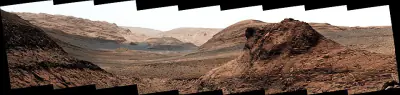 Mars — The Red Planet, recognizable by its reddish-orange hue
Equipment Guide
- Naked eye: Venus, Jupiter, Saturn, Mars, Mercury (with care)
- Binoculars: Jupiter moons, Uranus, Saturn rings (barely)
- Small telescope: Saturn rings, Jupiter bands, Mars surface features, Neptune
Viewing Tips
- Check planets rise/set times for your specific date
- Planets appear along the ecliptic (zodiac path)
- Planets don't twinkle like stars - steady light
- Venus and Jupiter are unmistakable - brightest objects after Moon
- Use a stargazing app to confirm planet positions
- Best viewing: when planet is highest in sky (transit)
Best Viewing Months
- Evening: Oct, Nov, Dec, Jan, Feb
- Morning: Jul, Aug, Sep
Seasonal Highlights at Upper East Eagle Trailhead (#33), Greenlee
The sky isn't the only thing that changes with the seasons at Upper East Eagle Trailhead (#33).
Upper East Eagle Trailhead (#33) is a year-round destination, but each season has its own character and highlights.
Spring Wildflowers
Peak bloom: March - April
Check local park websites for bloom reports
Fall Foliage
Peak color: October 15 – November 5
Best trees for color: Maple, Oak, Aspen
Higher elevations peak 1-2 weeks earlier
Bird Migration
Spring peak: March - April
Fall peak: October - November
Best spots: Wetlands, coastlines, mountain ridges
Indigenous Land at Upper East Eagle Trailhead (#33), Greenlee
This area sits on land with a deep human history that predates modern recreation.
The 3 Indigenous groups connected to this land include Chiricahua Apache, Pueblos, Ndee/Nnēē: (Western Apache).
Territories
Languages
Indigenous languages connected to this territory include White Mountain, Chiricahua.
Data from Native Land Digital
Upper East Eagle Trailhead (#33), Greenlee Geology & Natural History
Beyond the trails and wildlife, Upper East Eagle Trailhead (#33) sits within a landscape shaped by millions of years of geological processes. Here's what researchers and surveys have documented about this area.
Bedrock Geology
- Rock Type
- Pliocene to middle Miocene deposits
- Lithology
- Major:{conglomerate,sandstone}, Minor:{mudstone,siltstone,limestone,gypsum}
- Age
- Cenozoic
Mineral Deposits
- Deposit Sites
- 11
- Richness
- Moderate
- Minerals Found
- Sand and Gravel, Construction, Volcanic Materials
Endangered Species
- Species at Risk
- 2513
- ESA Endangered
- 61
- ESA Threatened
- 31
- Conservation Score
- 100/100
Temperature Records
- Record High
- 105°F (1970-07-14)
- Record Low
- -18°F (1990-12-23)
Wildfire History
This area has a relatively low wildfire risk, but always follow posted fire regulations.
- Recorded Fires
- 211
- Largest Fire
- Wallow (538,051.6 acres)
- Most Recent
- 2024
- Fire Risk
- Extreme
Watershed
- Watershed
- Grant Creek
- Water Quality (Good)
- 0%
- Impaired
- 0%
Reported Phenomena
- Bigfoot Reports
- 1 (BFRO)
- Eeriness Score
- 8/100
Upper East Eagle Trailhead (#33), Greenlee Safety & Conditions
Before heading out, check these real-time safety resources for current conditions.
Check these official resources for current conditions at Upper East Eagle Trailhead (#33) before you go.
Coordinates: 33.522201, -109.311071