Giant Logs Trail Stop #11, Petrified Forest National Park
Attractions in Arizona
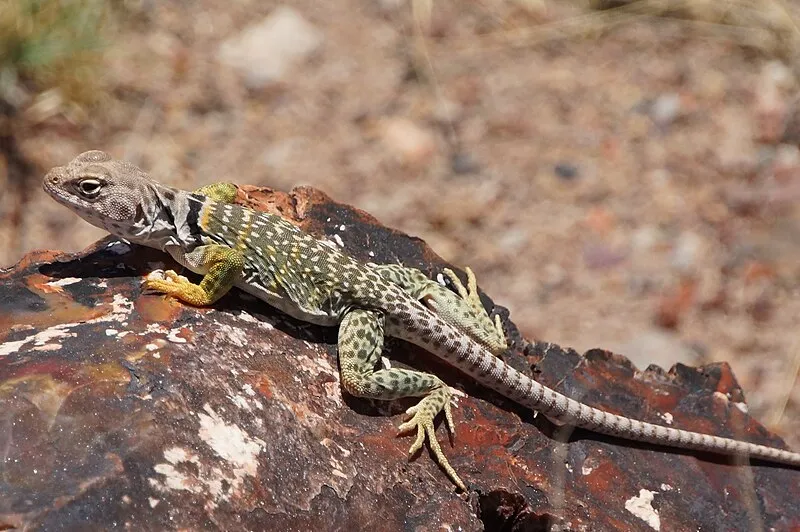
Photo: rob Stoeltje from loenen, netherlands / CC BY 2.0
Part of Petrified Forest National Park
Near Petrified Forest Natl Pk, AZ in Arizona
What to Pack for Giant Logs Trail Stop #11, Petrified Forest National Park
A well-packed bag handles most of what this area can throw at you.
Between the Desert terrain and venomous snakes, your pack for Giant Logs Trail Stop #11 needs a few specific items.
Essential
-
Water (minimum 2L) — Water sources marked on maps may be seasonal or dry; carrying enough to complete your route prevents a dangerous shortfall.
-
Navigation (map/GPS/compass) — Getting lost is the leading cause of backcountry search-and-rescue calls; reliable navigation prevents the situation entirely.
-
Sun protection (sunglasses, sunscreen) — Prolonged sun exposure causes headaches, fatigue, and heat exhaustion that can cut a trip short or create a medical emergency.
-
First aid kit — Remote locations mean longer response times for help; a first aid kit bridges the gap between injury and professional care.
-
Extra food — High-energy snacks weigh little but provide crucial fuel if you need to bushwhack out or wait for conditions to improve.
-
Headlamp with extra batteries — Hands-free light is essential for navigating uneven terrain, setting up camp, or signaling for help at night.
-
Fire starter — Waterproof matches or a ferro rod weigh almost nothing and can be the difference between a cold night and a survivable one.
-
Emergency shelter (space blanket) — Wind and rain strip heat faster than most people realize; a compact emergency shelter blocks both.
-
Knife or multi-tool — A multi-tool handles problems you can't predict: jammed zippers, tangled line, first-aid tape cutting, or gear fixes on the trail.
-
Extra clothing layer — A lightweight fleece or puffy stuffs small but provides critical insulation if temperatures drop unexpectedly.
Wildlife Gear
-
Hiking buddy (avoid solo) — A companion can help with first aid, signaling, and decision-making if a wildlife encounter turns serious.
-
Noise maker — Group noise is especially important in dense brush or near berry patches where bears may be feeding and less alert.
-
Gaiters — Thick gaiters deflect fangs before they reach skin, buying critical time in areas with rattlesnakes or copperheads.
-
First-aid snakebite kit — Knowing how to immobilize a limb, mark swelling progression, and avoid harmful folk remedies can improve outcomes.
Climate Gear
-
Layering system (wide temp swings) — A base layer, insulating mid-layer, and wind shell cover the full range of temperatures you might encounter in a single day.
Terrain Gear
-
Wide-brim hat — At high elevation where UV is 10-12% stronger per 1,000 feet of gain, a hat provides constant passive protection.
-
Sunscreen SPF50+ — Sunburn isn't just discomfort — severe burns cause fluid loss, fatigue, and impaired thermoregulation that compound in remote settings.
-
Extra water (desert) — In arid heat, your body loses 1-2 liters per hour during exertion; running out of water in the desert is life-threatening.
-
SPF50 lip balm — High elevation, snow glare, and desert sun amplify UV exposure on exposed facial skin, especially lips.
Seasonal Gear
- Spring: Camera, Wildflower field guide
- Fall: Camera, Binoculars (foliage viewing)
- Winter: Microspikes/traction devices
Activities & Best Time to Visit Giant Logs Trail Stop #11, Petrified Forest National Park
The Desert terrain here lends itself to a range of outdoor activities throughout the year.
May, Jun, Jul, Aug, Sep is the prime window for visiting Giant Logs Trail Stop #11, when conditions favor hiking and the weather cooperates.
With a photography score of 65/100, Giant Logs Trail Stop #11 offers Exceptional dark sky (Bortle 1-2) and 3 excellent meteor showers worth capturing.
Activities
-
hiking — Hiking ranges from gentle nature walks to challenging summit climbs.
-
photography — Golden hour and dramatic weather can transform ordinary scenes into striking images.
-
picnicking — Picnicking turns a scenic overlook or shady grove into a memorable gathering spot.
-
sightseeing — Sightseeing highlights iconic vistas, waterfalls, and unique rock formations.
-
walking — Walking lets you slow down and notice details — wildflowers, birdsong, shifting light through trees.
Best months: May, Jun, Jul, Aug, Sep
Terrain: Desert — Cacti, shrubs, and drought-tolerant plants dominate arid landscapes.
Wildlife Safety at Giant Logs Trail Stop #11, Petrified Forest National Park
A few species in this area warrant awareness — here's what to keep in mind.
Giant Logs Trail Stop #11 carries a danger score of 30/10, driven primarily by venomous snakes.
- Mountain lions
- Venomous snakes
- Remote (158mi from city)
- Exceptional dark sky (Bortle 1-2)
- 3 excellent meteor showers
- Fall foliage
- Spring wildflowers
Venomous Snakes
Watch your step — are present in the Desert habitat around Giant Logs Trail Stop #11.
- Watch where you step and place hands
- Stay on trails
- Wear boots and long pants in snake country
- Do not reach under rocks or logs
- If bitten: stay calm, immobilize limb, seek medical help immediately
- Do NOT: cut wound, suck venom, apply tourniquet, ice, or alcohol
Nature & Wildlife at Giant Logs Trail Stop #11, Petrified Forest National Park
The Desert terrain here supports a rich ecosystem worth noticing as you explore.
Biodiversity at Giant Logs Trail Stop #11 is shaped by the Desert terrain and Arid climate, producing distinct plant and animal communities.
Wildflowers (5)
-
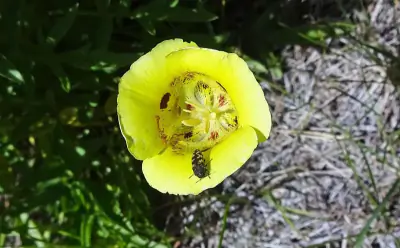 golden mariposa lily — Three broad petals forming an open bowl.
 -
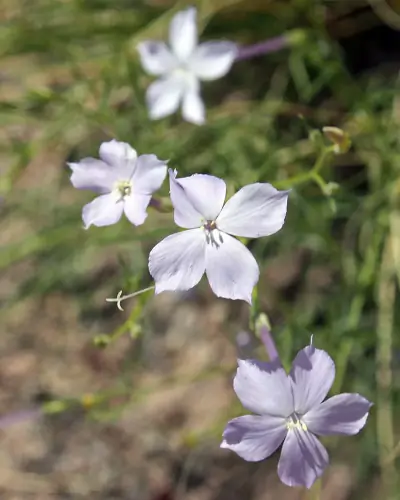 Flaxflowered Ipomopsis — Fine threadlike leaves along upright growth.
 -
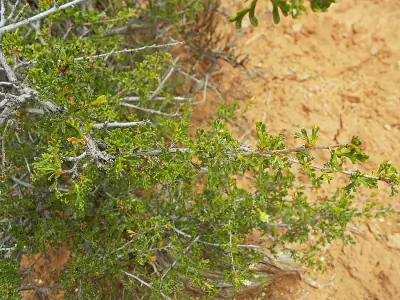 Stansbury's Cliffrose — Creamy white five-petaled flowers with yellow centers.
 -
 Pinkflower Hedgehog Cactus — Bright pink funnel-shaped flowers near stem tips.
 -
 Rose Heath — Pink urn-shaped flowers clustered along stems.
Shrubs (2)
-
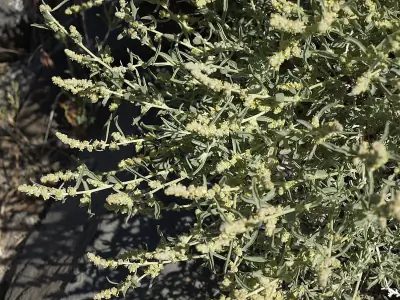 Fourwing Saltbush — A gray-green shrub with narrow leaves and papery four-winged seed bracts.
 -
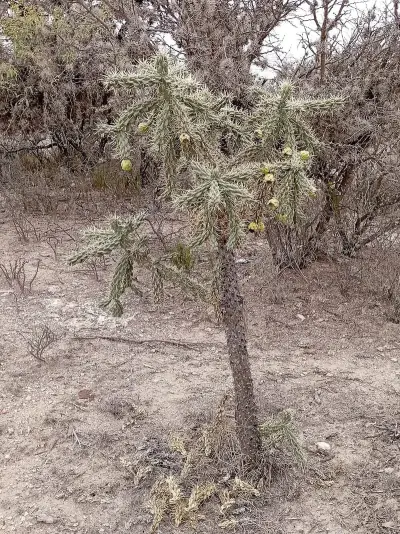 tree cholla — Spines detach easily and cling to fur or clothing. The plant produces greenish to yellow flowers in spring.
Other Plants (5)
-
Whipple Cholla
-
Plains Pricklypear
-
Desert Prince's Plume
-
crispleaf buckwheat
-
silverleaf nightshade
Mammals (9)
-
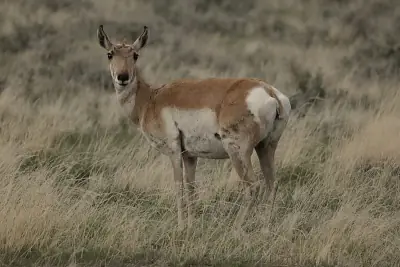 Pronghorn — Both sexes have short, curved horns with a forward prong.
 -
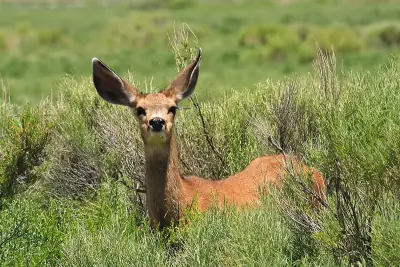 Mule Deer — Coat ranges from tawny brown in summer to gray-brown in winter.
 -
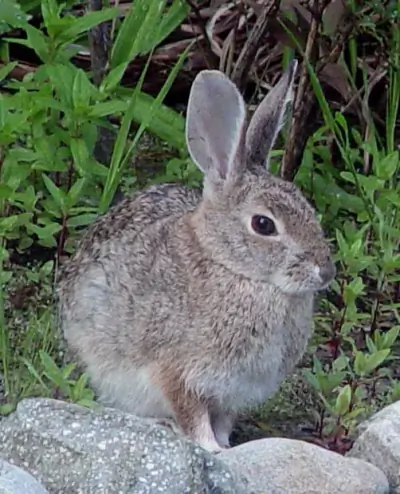 Desert Cottontail — Lean body suited to arid habitats.
 -
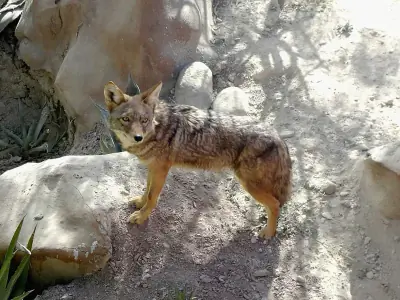 Coyote — Narrow muzzle and upright ears.
 -
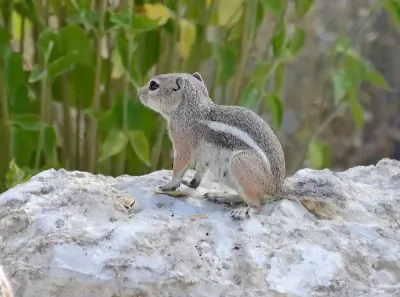 White-tailed Antelope Squirrel — White underside and underside of tail.
Birds (10)
-
 Rock Pigeon — White or mottled urban color morphs
 -
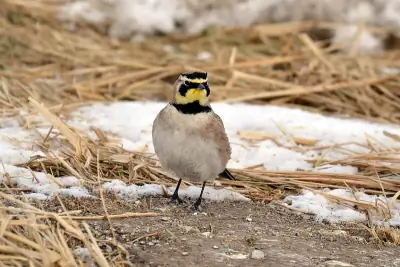 Horned Lark — Small black feather tufts
 -
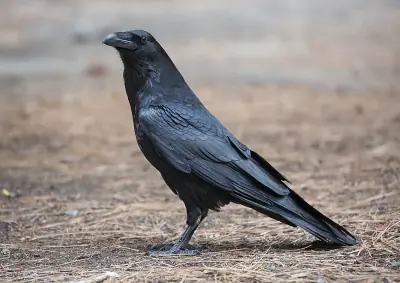 Common Raven — Broad wings with fingered primaries
 -
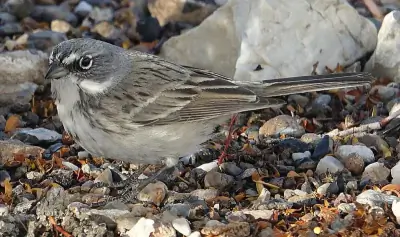 Sagebrush Sparrow — Brown streaked back
 -
 American Kestrel — Blue-gray wings in male
Reptiles (13)
-
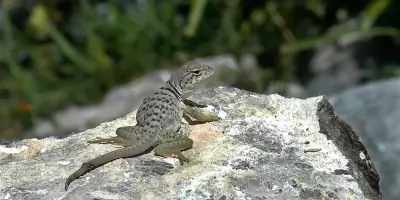 Eastern Collared Lizard — Males display bright green and blue hues during breeding season.
 -
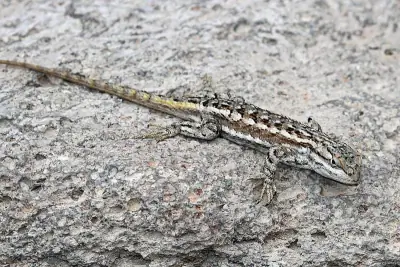 Plateau Fence Lizard — Males show blue belly patches.
 -
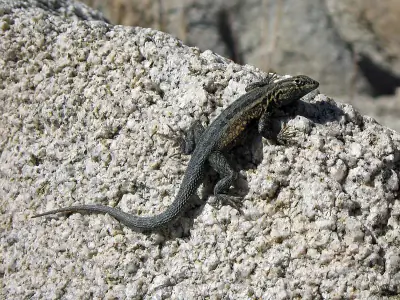 Common Side-blotched Lizard — Distinct dark blotch behind the front legs on each side.
 -
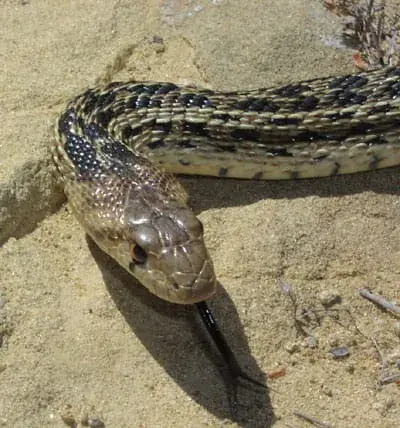 Gopher Snake — Head is slightly broader than the neck and often patterned with dark facial markings.
 -
 Greater Short-horned Lizard — Color matches surrounding soil in browns and grays.
Amphibians (3)
-
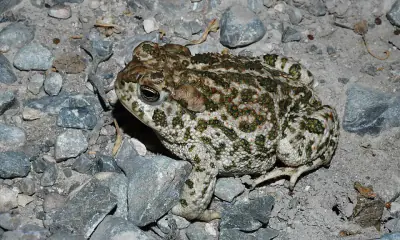 Great Plains Toad
 -
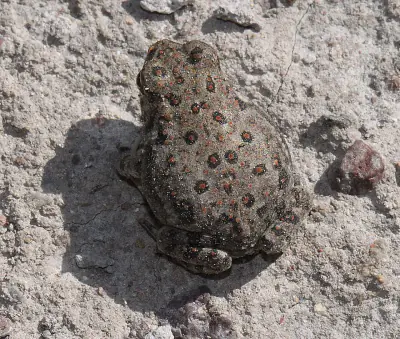 Mexican Spadefoot
 -
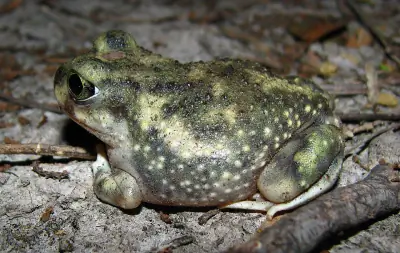 Couch's Spadefoot
Insects (4)
-
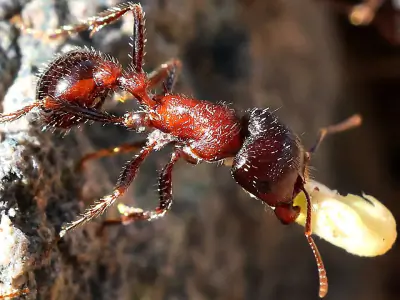 Rough Harvester Ant
 -
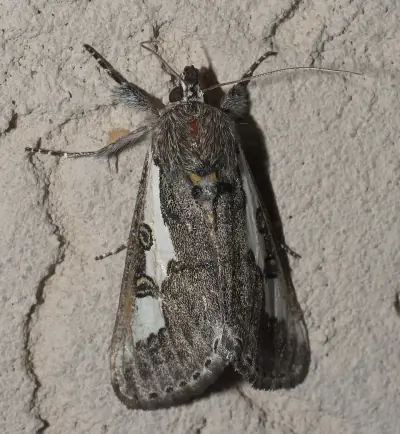 Purslane Moth
 -
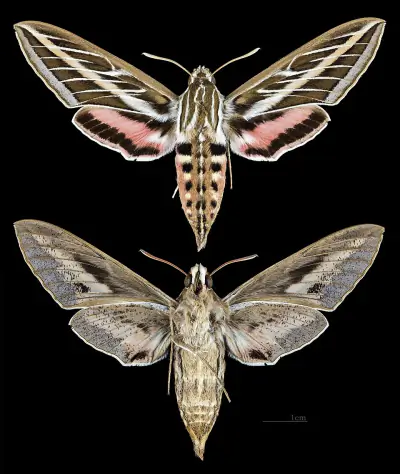 White-lined Sphinx
 -
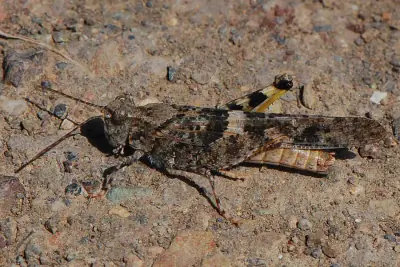 Pallid-winged Grasshopper
Other Wildlife (1)
-
Common Desert Centipede
Nature Bingo at Giant Logs Trail Stop #11, Petrified Forest National Park
Can you spot them all? Check off each species as you find it on your visit.
Wildlife Challenge
Botany Challenge
Giant Logs Trail Stop #11, Petrified Forest National Park Climate & Sun
Use this climate breakdown to plan around the weather.
Temperature and precipitation data for Giant Logs Trail Stop #11 help narrow down the ideal visit window.
Climate type: Arid
Annual avg temp: 54.8°F
Annual precipitation: 9.6 in
With an average annual temperature of 54.8°F and 9.6 inches of precipitation, Giant Logs Trail Stop #11 has mild, arid conditions. Summer highs average around 76°F, while winter lows drop to 35°F.
Best months to visit: Apr, May, Jun, Aug, Sep, Oct.
| Month | Avg Temp | Precip |
|---|---|---|
| Jan | 35°F | 0.7 in |
| Feb | 40°F | 0.6 in |
| Mar | 46°F | 0.7 in |
| Apr | 53°F | 0.4 in |
| May | 61°F | 0.4 in |
| Jun | 71°F | 0.2 in |
| Jul | 76°F | 1.6 in |
| Aug | 74°F | 1.6 in |
| Sep | 68°F | 1.0 in |
| Oct | 56°F | 0.9 in |
| Nov | 44°F | 0.7 in |
| Dec | 35°F | 0.8 in |
Daylight & Sun Times
Daylight ranges from 9.8 hours in winter to 14.5 hours in summer — a difference of 4.7 hours.
Summer: 5:05 AM – 7:33 PM
Winter: 7:19 AM – 5:09 PM
Giant Logs Trail Stop #11, Petrified Forest National Park Trip Planning & Access
With the lay of the land covered, here are the trip planning details.
At 158 miles from Phoenix, Giant Logs Trail Stop #11 is a longer road trip for most visitors.
Visitor Friendliness
Visitor friendliness: families (excellent), dogs (likely_allowed), elderly (highly_suitable).
- Dogs: likely_allowed — No restrictions found
- Families: excellent
- Elderly: highly_suitable
- Strollers: excellent (100/100)
- Beginners: Perfect for beginners (Moderate difficulty (+5), Good information available (+5))
- Accessibility: Generally accessible to most visitors (90/100)
Places Near Giant Logs Trail Stop #11, Petrified Forest National Park
Nearby trails, campgrounds, and attractions expand what you can do on this trip.
Don't limit your trip to just Giant Logs Trail Stop #11 — the surrounding area has 6 more places to discover.
Nearby Trails
- Giant Logs Trail (N, 0mi), Petrified Forest National Park 0.1 mi
- Rainbow Forest Sidewalk, Petrified Forest National Park 0.1 mi
- Agate House Trail (N, 0mi), Petrified Forest National Park 0.62 mi
- Long Logs Trail (N, 0mi), Petrified Forest National Park 0.62 mi
- Crystal Forest Trail (N, 0mi), Petrified Forest National Park 5.51 mi
Nearby Attractions
Stargazing & Night Sky at Giant Logs Trail Stop #11, Petrified Forest National Park
Don't pack up when the sun goes down — the night sky here has plenty to offer.
Night falls differently here — the Bortle 2 rating means Typical truly dark site visibility for stars, planets, and meteor showers.
Constellations
Look for Ursa Minor, Cepheus — all visible from this location depending on the season.
-
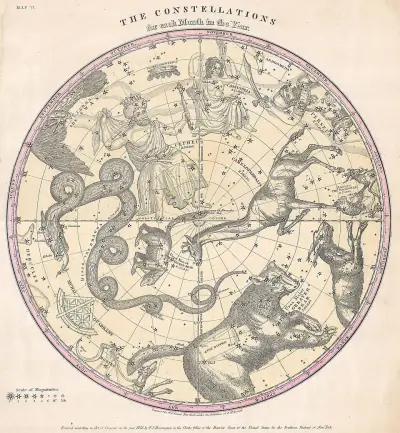 Ursa Minor — This compact constellation contains Polaris at the end of its handle, a reliable guide to true north.
 -
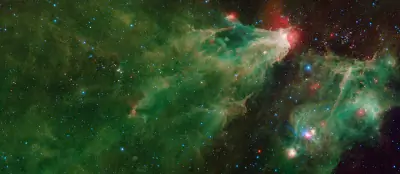 Cepheus — Named for a mythological king, this constellation sits beside Cassiopeia and is circumpolar in northern latitudes.
Meteor Showers
For meteor viewing, the Geminids (December 13-14) offers the best show at this location.
-
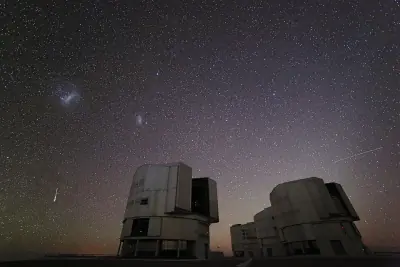 Geminids — peaks December 13-14 (excellent)
Cold December air often means clear skies—look overhead after midnight for bright, slow-moving meteors.
-
 Quadrantids — peaks January 3-4 (excellent)
Bundle up—January nights are frigid, but dark skies can produce bright fireballs.
-
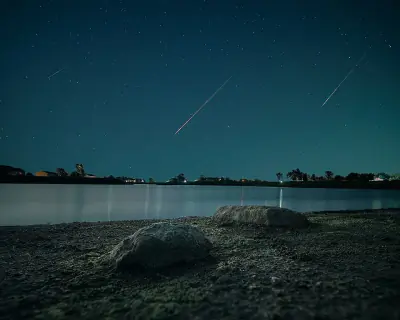 Perseids — peaks August 11-13 (excellent)
Peak activity typically builds after midnight when Perseus climbs higher.
-
 Eta Aquariids — peaks May 5-6 (good)
Southern U.S. observers often get better rates due to the radiant's position.
-
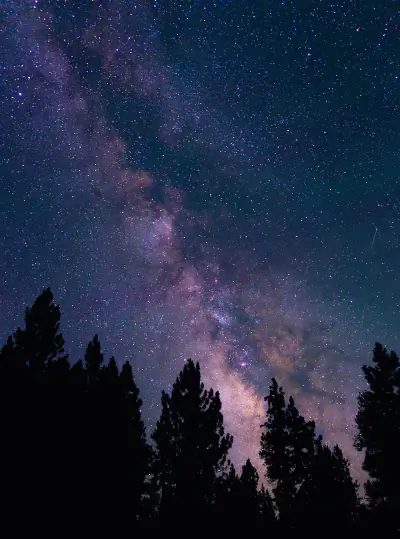 Delta Aquariids — peaks July 28-29 (fair)
This steady shower rewards patient observers in dark, moonless conditions.
Planets
Planets visible to the naked eye from this location:
-
 Venus — The brightest planet, often called the Morning or Evening Star
 -
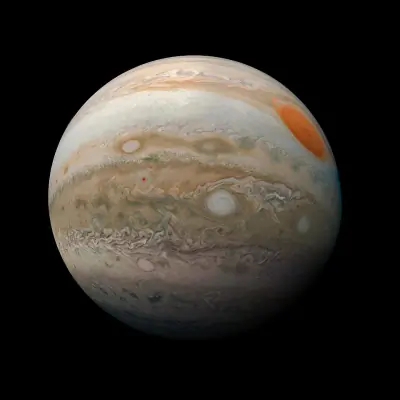 Jupiter — The largest planet, bright and steady in the night sky
 -
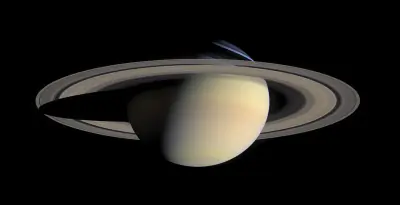 Saturn — Famous for its rings, visible as a golden steady light
 -
 Mars — The Red Planet, recognizable by its reddish-orange hue
Equipment Guide
- Naked eye: Venus, Jupiter, Saturn, Mars, Mercury (with care)
- Binoculars: Jupiter moons, Uranus, Saturn rings (barely)
- Small telescope: Saturn rings, Jupiter bands, Mars surface features, Neptune
Viewing Tips
- Check planets rise/set times for your specific date
- Planets appear along the ecliptic (zodiac path)
- Planets don't twinkle like stars - steady light
- Venus and Jupiter are unmistakable - brightest objects after Moon
- Use a stargazing app to confirm planet positions
- Best viewing: when planet is highest in sky (transit)
Best Viewing Months
- Evening: Oct, Nov, Dec, Jan, Feb
- Morning: Jul, Aug, Sep
Seasonal Highlights at Giant Logs Trail Stop #11, Petrified Forest National Park
Different seasons reveal different sides of Giant Logs Trail Stop #11.
Nature at Giant Logs Trail Stop #11 follows a seasonal calendar — here's when to come for what you want to see.
Spring Wildflowers
Peak bloom: March - April
Check local park websites for bloom reports
Fall Foliage
Peak color: October 15 – November 5
Best trees for color: Maple, Oak, Aspen
Higher elevations peak 1-2 weeks earlier
Bird Migration
Spring peak: March - April
Fall peak: October - November
Best spots: Wetlands, coastlines, mountain ridges
Indigenous Land at Giant Logs Trail Stop #11, Petrified Forest National Park
This landscape holds cultural significance that extends far beyond recreation.
The cultural landscape of Giant Logs Trail Stop #11 reflects the long presence of Diné Bikéyah, Pueblos, Shiwinna (Zuni) on this land.
Territories
Languages
2 Indigenous languages are associated with the peoples of this area: Shiwi’ma Bena:we, Diné Bizaad.
Data from Native Land Digital
Giant Logs Trail Stop #11, Petrified Forest National Park Geology & Natural History
Beyond the trails and wildlife, Giant Logs Trail Stop #11 sits within a landscape shaped by millions of years of geological processes. Here's what researchers and surveys have documented about this area.
Bedrock Geology
- Rock Type
- Moenkopi Formation
- Formation
- Moenkopi Formation
- Lithology
- Major:{sandstone,mudstone}, Minor:{gypsum}
- Age
- Triassic
Fossils
- Fossil Occurrences
- 132
- Unique Species
- 51
- Oldest
- 246.7 million years ago
Mineral Deposits
- Deposit Sites
- 23
- Richness
- High
- Minerals Found
- Uranium, Sand and Gravel, Construction, Helium, Vanadium, Gypsum-Anhydrite, Halite, Semiprecious Gemstone
Endangered Species
- Species at Risk
- 1478
- ESA Endangered
- 29
- ESA Threatened
- 16
- Conservation Score
- 100/100
Temperature Records
- Record High
- 110°F (2007-07-10)
- Record Low
- -27°F (1971-01-06)
Wildfire History
This area has a relatively low wildfire risk, but always follow posted fire regulations.
- Recorded Fires
- 1
- Largest Fire
- OLD WOODRUFF (1.4 acres)
- Most Recent
- 2021
- Fire Risk
- Low
Caves & Karst Features
- Feature Types
- Evaporite rocks at or near the land surface in a dry climate, evaporite_basin
- Karst Score
- 40
Watershed
- Watershed
- Woodruff Lake-Little Colorado River
- Water Quality (Good)
- 0%
- Impaired
- 26.858%
Meteorite Landings
- Meteorites Found
- 1
- Largest
- Holbrook (220 kg)
Reported Phenomena
- UFO Sightings
- 4 (NUFORC)
- Eeriness Score
- 8/100
Giant Logs Trail Stop #11, Petrified Forest National Park Safety & Conditions
For up-to-the-minute safety information, use these official resources.
Don't rely on forecasts alone — check these live sources for the latest conditions near Giant Logs Trail Stop #11.
Coordinates: 34.815468, -109.867783