Icehouse C C C Trailhead, Gila
Trailheads in Arizona
Near Globe, AZ in Arizona
What to Pack for Icehouse C C C Trailhead, Gila
The right gear makes all the difference — here's a packing list tailored to this area.
Every item on this list exists because of specific conditions at Icehouse C C C — Desert terrain, Semi-Arid, and local wildlife.
Essential
-
Water (minimum 2L) — Water sources marked on maps may be seasonal or dry; carrying enough to complete your route prevents a dangerous shortfall.
-
Navigation (map/GPS/compass) — Getting lost is the leading cause of backcountry search-and-rescue calls; reliable navigation prevents the situation entirely.
-
Sun protection (sunglasses, sunscreen) — Prolonged sun exposure causes headaches, fatigue, and heat exhaustion that can cut a trip short or create a medical emergency.
-
First aid kit — Remote locations mean longer response times for help; a first aid kit bridges the gap between injury and professional care.
-
Extra food — High-energy snacks weigh little but provide crucial fuel if you need to bushwhack out or wait for conditions to improve.
-
Headlamp with extra batteries — Hands-free light is essential for navigating uneven terrain, setting up camp, or signaling for help at night.
-
Fire starter — Waterproof matches or a ferro rod weigh almost nothing and can be the difference between a cold night and a survivable one.
-
Emergency shelter (space blanket) — Wind and rain strip heat faster than most people realize; a compact emergency shelter blocks both.
-
Knife or multi-tool — A multi-tool handles problems you can't predict: jammed zippers, tangled line, first-aid tape cutting, or gear fixes on the trail.
-
Extra clothing layer — A lightweight fleece or puffy stuffs small but provides critical insulation if temperatures drop unexpectedly.
Wildlife Gear
-
Hiking buddy (avoid solo) — A companion can help with first aid, signaling, and decision-making if a wildlife encounter turns serious.
-
Noise maker — Group noise is especially important in dense brush or near berry patches where bears may be feeding and less alert.
-
Gaiters — Thick gaiters deflect fangs before they reach skin, buying critical time in areas with rattlesnakes or copperheads.
-
First-aid snakebite kit — Knowing how to immobilize a limb, mark swelling progression, and avoid harmful folk remedies can improve outcomes.
Terrain Gear
-
Wide-brim hat — At high elevation where UV is 10-12% stronger per 1,000 feet of gain, a hat provides constant passive protection.
-
Sunscreen SPF50+ — Sunburn isn't just discomfort — severe burns cause fluid loss, fatigue, and impaired thermoregulation that compound in remote settings.
-
Extra water (desert) — In arid heat, your body loses 1-2 liters per hour during exertion; running out of water in the desert is life-threatening.
Seasonal Gear
- Spring: Camera, Wildflower field guide
- Fall: Camera, Binoculars (foliage viewing)
Activities & Best Time to Visit Icehouse C C C Trailhead, Gila
The Desert terrain here lends itself to a range of outdoor activities throughout the year.
Outdoor recreation at Icehouse C C C centers on photography, with the May, Jun, Jul, Aug, Sep months offering the best conditions.
With a photography score of 55/100, Icehouse C C C offers Good dark sky (Bortle 4) and 3 excellent meteor showers worth capturing.
Activities
-
photography — Golden hour and dramatic weather can transform ordinary scenes into striking images.
-
picnicking — Picnicking turns a scenic overlook or shady grove into a memorable gathering spot.
-
walking — Walking lets you slow down and notice details — wildflowers, birdsong, shifting light through trees.
-
wildlife_viewing — Early mornings and dusk offer the best chances to quietly spot native wildlife.
Best months: May, Jun, Jul, Aug, Sep
Terrain: Desert — Cacti, shrubs, and drought-tolerant plants dominate arid landscapes.
Wildlife Safety at Icehouse C C C Trailhead, Gila
Most wildlife encounters are positive, but a few potential hazards are worth knowing about.
A danger score of 25/10 means Icehouse C C C requires moderate preparation compared to the average trail.
- Mountain lions
- Venomous snakes
- Far from city (74mi)
- Good dark sky (Bortle 4)
- 3 excellent meteor showers
- Fall foliage
- Spring wildflowers
Venomous Snakes
Watch your step — are present in the Desert habitat around Icehouse C C C.
- Watch where you step and place hands
- Stay on trails
- Wear boots and long pants in snake country
- Do not reach under rocks or logs
- If bitten: stay calm, immobilize limb, seek medical help immediately
- Do NOT: cut wound, suck venom, apply tourniquet, ice, or alcohol
Nature & Wildlife at Icehouse C C C Trailhead, Gila
The Desert terrain here supports a rich ecosystem worth noticing as you explore.
The plant life here ranges from in the canopy to California poppy and blackfoot daisy along the trail edges.
Wildflowers (2)
-
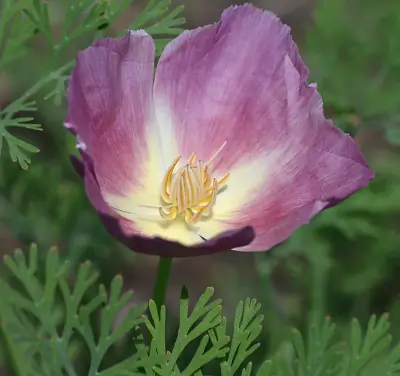 California poppy — Finely divided blue-green foliage forming low mounds.
 -
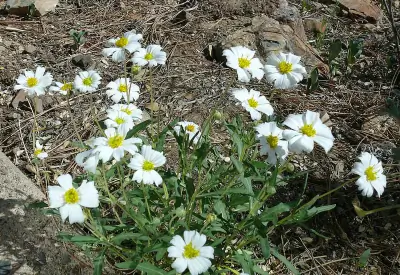 blackfoot daisy — Low rounded clumps of narrow gray-green leaves.
Shrubs (5)
-
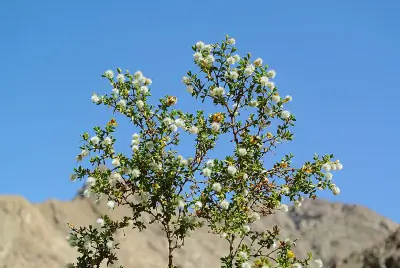 Creosote Bush — Bright yellow flowers bloom after rain.
 -
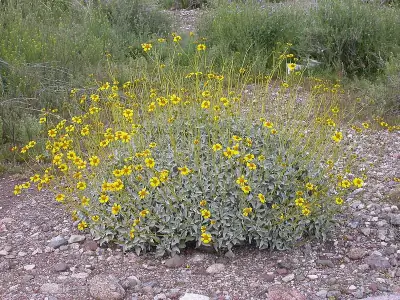 Brittlebush — Leaves are soft and pale gray, contrasting with long-stemmed golden blooms.
 -
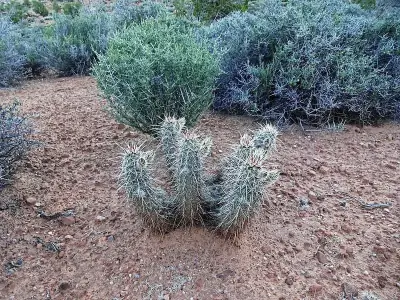 Engelmann's Hedgehog Cactus — Engelmann's hedgehog cactus is a low, clumping barrel cactus with cylindrical stems covered in dense radial spines. Flowers are large and showy, typically magenta to pink, blooming in late spring.
Other Plants (5)
-
saguaro
-
Chain-fruit Cholla
-
Graham's nipple cactus
-
ocotillo
-
Arizona Hedgehog Cactus
Mammals (4)
-
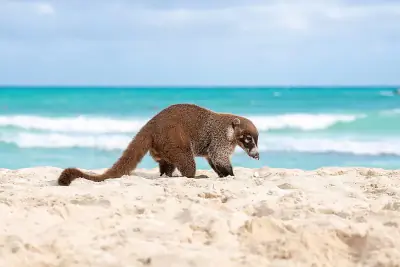 White-nosed Coati — Slender body with elongated snout.
 -
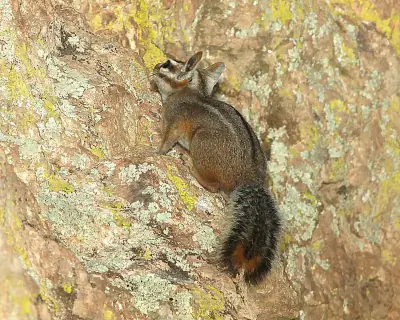 Cliff Chipmunk — White eyebrow stripe contrasts with darker eye line.
 -
 Rock Squirrel — Stouter and larger than many other ground squirrels.
 -
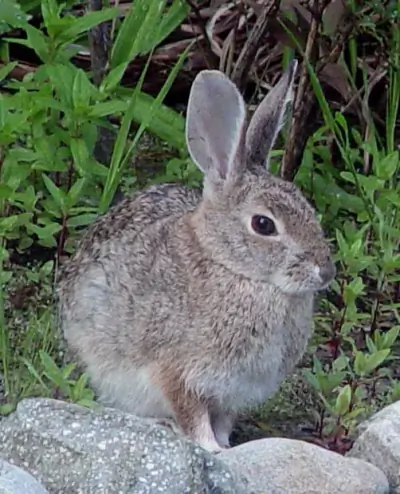 Desert Cottontail — Lean body suited to arid habitats.
Birds (30)
-
 Brewer's Blackbird — Brown female with dark eye
 -
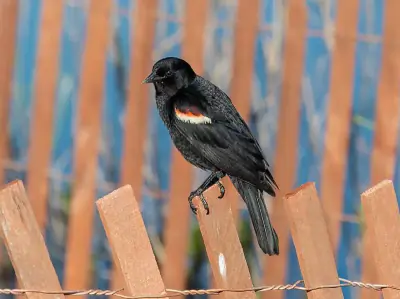 Red-winged Blackbird — Streaked brown female
 -
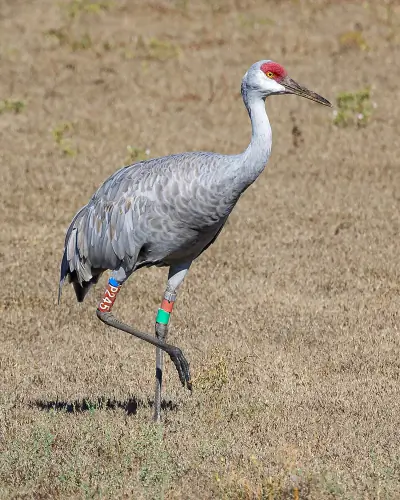 Sandhill Crane — Red crown patch
 -
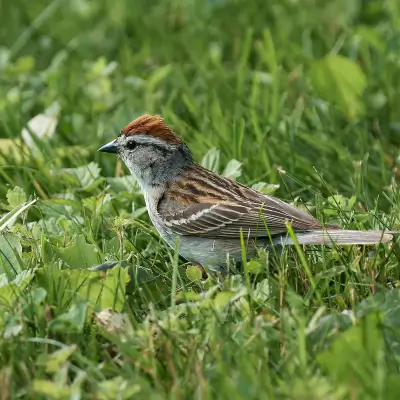 Chipping Sparrow — Black eye line
 -
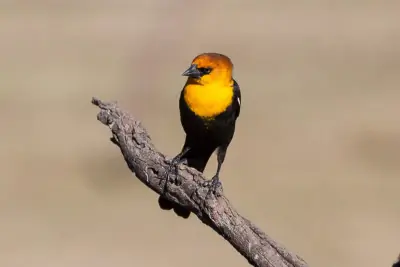 Yellow-headed Blackbird — Bright yellow head and chest
Reptiles (11)
-
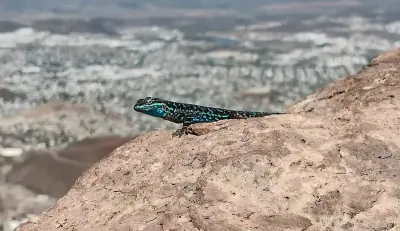 Ornate Tree Lizard — Males may show bluish patches on the belly.
 -
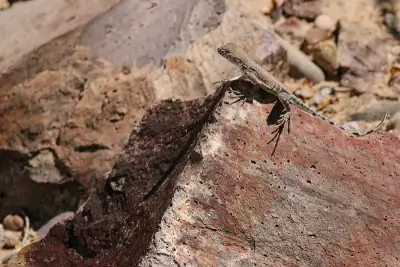 Greater Earless Lizard — Tan to brown with darker blotches and pale underside.
 -
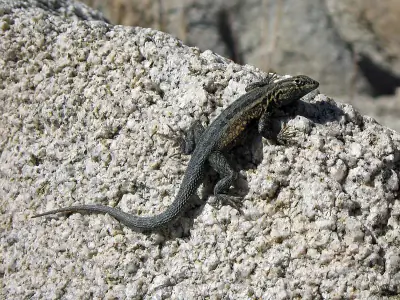 Common Side-blotched Lizard — Distinct dark blotch behind the front legs on each side.
 -
 Western Diamond-backed Rattlesnake — Black-and-white banded tail ending in a rattle.
 -
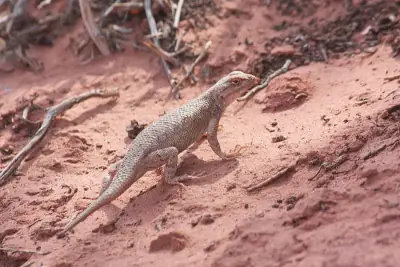 Desert Spiny Lizard — Males may show blue patches on the underside.
Amphibians (3)
-
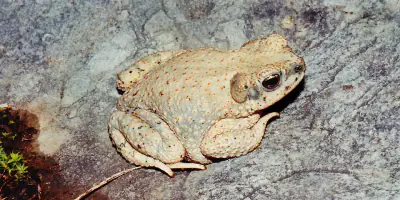 Red-spotted Toad
 -
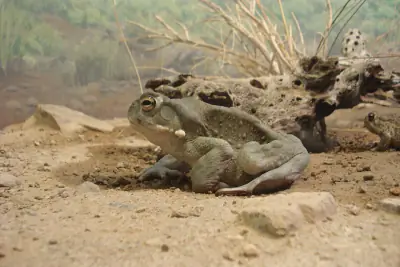 Sonoran Desert Toad
 -
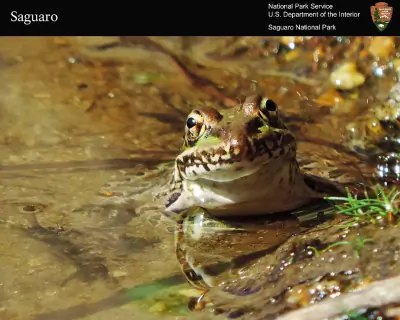 Lowland Leopard Frog
Insects (18)
-
 Queen
Queen -
 Pipevine Swallowtail
 -
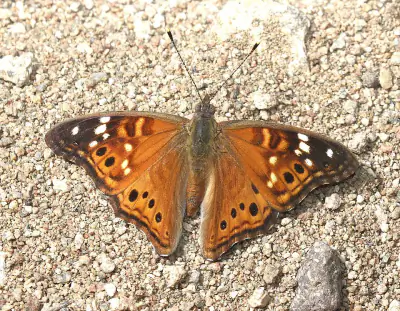 Empress Leilia
 -
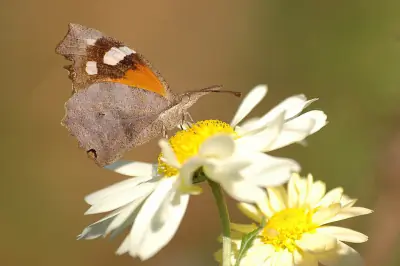 American Snout
 -
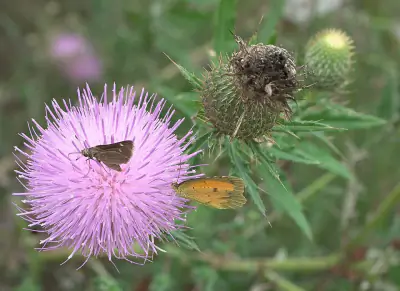 Sleepy Orange
Nature Bingo at Icehouse C C C Trailhead, Gila
Can you spot them all? Check off each species as you find it on your visit.
Wildlife Challenge
Botany Challenge
Icehouse C C C Trailhead, Gila Climate & Sun
Month-by-month climate and daylight information for Icehouse C C C.
With 17 inches of annual precipitation and an average of 61.8°F, Icehouse C C C has Semi-Arid conditions.
Climate type: Semi-Arid
Annual avg temp: 61.8°F
Annual precipitation: 17 in
With an average annual temperature of 61.8°F and 17 inches of precipitation, Icehouse C C C has warm, dry conditions. Summer highs average around 81°F, while winter lows drop to 44°F.
Best months to visit: Mar, Apr, May, Sep, Oct, Nov.
| Month | Avg Temp | Precip |
|---|---|---|
| Jan | 44°F | 2.2 in |
| Feb | 47°F | 2.0 in |
| Mar | 53°F | 1.5 in |
| Apr | 59°F | 0.5 in |
| May | 67°F | 0.4 in |
| Jun | 77°F | 0.2 in |
| Jul | 81°F | 2.3 in |
| Aug | 79°F | 2.4 in |
| Sep | 74°F | 1.3 in |
| Oct | 64°F | 1.3 in |
| Nov | 52°F | 1.1 in |
| Dec | 44°F | 1.8 in |
Daylight & Sun Times
Daylight ranges from 10 hours in winter to 14.3 hours in summer — a difference of 4.3 hours.
Summer: 5:12 AM – 7:33 PM
Winter: 7:19 AM – 5:17 PM
Icehouse C C C Trailhead, Gila Trip Planning & Access
Ready to visit? Here's what to know about getting here and what it'll cost.
Trip planning for Icehouse C C C starts with the 74-mile route from Phoenix.
Visitor Friendliness
Visitor friendliness: families (excellent), dogs (likely_allowed), elderly (highly_suitable).
- Dogs: likely_allowed — No restrictions found
- Families: excellent
- Elderly: highly_suitable
- Strollers: excellent (100/100)
- Beginners: Perfect for beginners (Easy difficulty - perfect for beginners (+20), Low-commitment activity (+10))
- Accessibility: Generally accessible to most visitors (100/100)
Places Near Icehouse C C C Trailhead, Gila
If you're in the area, these nearby destinations are worth considering too.
From campgrounds to trails to scenic attractions, 16 destinations surround Icehouse C C C.
Nearby Trails
- Check Dam Trail, Gila 0.37 mi
- Una Del Oso Trail, Gila 1.2 mi
- Icehouse Trail, Gila 2.83 mi
- Ferndell Trail, Gila 3.02 mi
- Sixshooter Canyon Trail, Gila 3.2 mi
Nearby Campgrounds
- Kellner Group Campground, Gila 1.51 mi
- Kellner Campground, Gila 1.51 mi
- Six Shooter Campground, Gila 3.1 mi
- Upper/lower Pinal Campground, Gila 3.1 mi
- Pioneer Pass Campground, Gila 3.26 mi
Stargazing & Night Sky at Icehouse C C C Trailhead, Gila
If you're staying past sunset, the stargazing conditions here are worth planning around.
For anyone who stays past sunset, the Bortle 4 conditions here reward patience with constellations and bright planets.
Constellations
Look for Ursa Minor, Cepheus — all visible from this location depending on the season.
-
 Ursa Minor — This compact constellation contains Polaris at the end of its handle, a reliable guide to true north.
 -
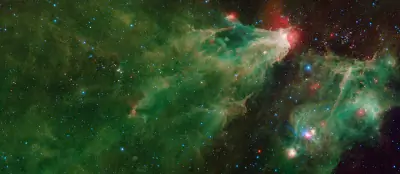 Cepheus — Named for a mythological king, this constellation sits beside Cassiopeia and is circumpolar in northern latitudes.
Meteor Showers
For meteor viewing, the Geminids (December 13-14) offers the best show at this location.
-
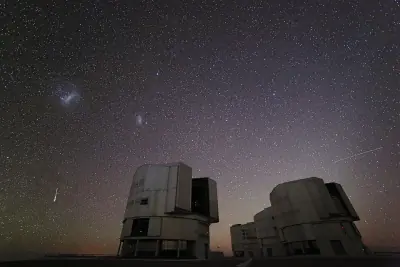 Geminids — peaks December 13-14 (excellent)
Cold December air often means clear skies—look overhead after midnight for bright, slow-moving meteors.
-
 Quadrantids — peaks January 3-4 (excellent)
Bundle up—January nights are frigid, but dark skies can produce bright fireballs.
-
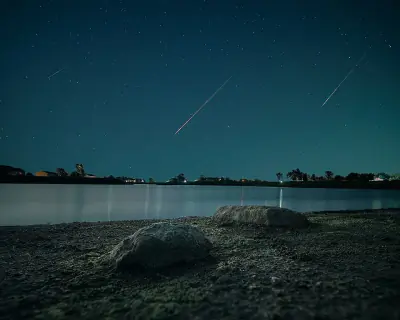 Perseids — peaks August 11-13 (excellent)
Peak activity typically builds after midnight when Perseus climbs higher.
-
 Eta Aquariids — peaks May 5-6 (good)
Southern U.S. observers often get better rates due to the radiant's position.
-
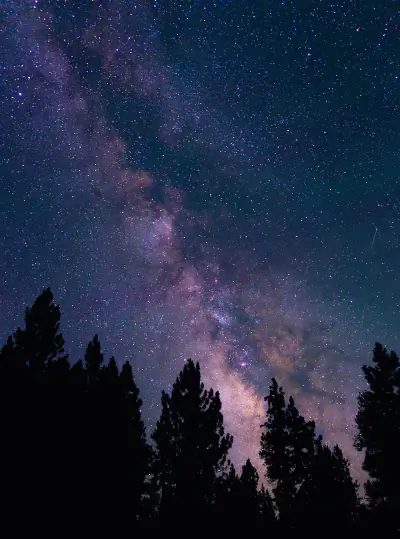 Delta Aquariids — peaks July 28-29 (fair)
This steady shower rewards patient observers in dark, moonless conditions.
Planets
Planets visible to the naked eye from this location:
-
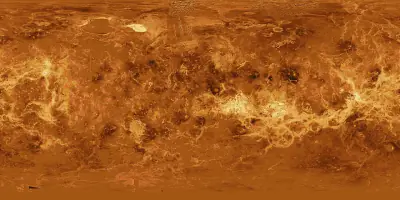 Venus — The brightest planet, often called the Morning or Evening Star
 -
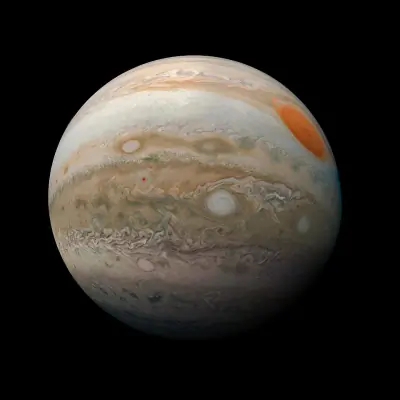 Jupiter — The largest planet, bright and steady in the night sky
 -
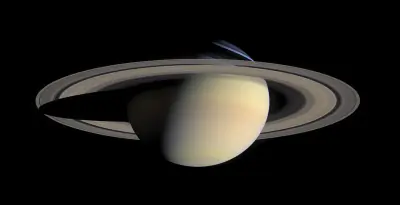 Saturn — Famous for its rings, visible as a golden steady light
 -
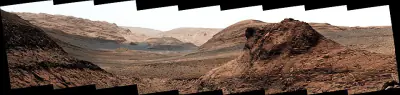 Mars — The Red Planet, recognizable by its reddish-orange hue
Equipment Guide
- Naked eye: Venus, Jupiter, Saturn, Mars, Mercury (with care)
- Binoculars: Jupiter moons, Uranus, Saturn rings (barely)
- Small telescope: Saturn rings, Jupiter bands, Mars surface features, Neptune
Viewing Tips
- Check planets rise/set times for your specific date
- Planets appear along the ecliptic (zodiac path)
- Planets don't twinkle like stars - steady light
- Venus and Jupiter are unmistakable - brightest objects after Moon
- Use a stargazing app to confirm planet positions
- Best viewing: when planet is highest in sky (transit)
Best Viewing Months
- Evening: Oct, Nov, Dec, Jan, Feb
- Morning: Jul, Aug, Sep
Seasonal Highlights at Icehouse C C C Trailhead, Gila
Each season brings something different to this area.
From wildflower blooms in spring to fall foliage in autumn, Icehouse C C C rewards visitors in every season.
Spring Wildflowers
Peak bloom: March - April
Check local park websites for bloom reports
Fall Foliage
Peak color: October 15 – November 5
Best trees for color: Maple, Oak, Aspen
Higher elevations peak 1-2 weeks earlier
Bird Migration
Spring peak: March - April
Fall peak: October - November
Best spots: Wetlands, coastlines, mountain ridges
Indigenous Land at Icehouse C C C Trailhead, Gila
Long before trails were marked and campgrounds built, this land was home to Indigenous peoples.
This area's history extends far beyond recreation — it is the traditional territory of Pueblos, Ndee/Nnēē: (Western Apache), Hohokam.
Territories
Languages
2 Indigenous languages are associated with the peoples of this area: San Carlos, Pima.
Data from Native Land Digital
Icehouse C C C Trailhead, Gila Geology & Natural History
Beyond the trails and wildlife, Icehouse C C C sits within a landscape shaped by millions of years of geological processes. Here's what researchers and surveys have documented about this area.
Bedrock Geology
- Rock Type
- Middle Proterozoic sedimentary rocks
- Formation
- Grand Canyon Supergroup; Chuar Group; Unkar Group; Apache Group; Troy Quartzite
- Lithology
- Major:{shale,sandstone,quartzite}, Minor:{limestone,basalt,black shale}, Incidental:{conglomerate}
- Age
- Proterozoic
Fossils
- Fossil Occurrences
- 1
- Unique Species
- 1
- Oldest
- 372.2 million years ago
Mineral Deposits
- Deposit Sites
- 285
- Richness
- Exceptional
- Minerals Found
- Copper, Gold, Silver, Asbestos, Tungsten, Uranium, Lead, Molybdenum
Endangered Species
- Species at Risk
- 1478
- ESA Endangered
- 29
- ESA Threatened
- 16
- Conservation Score
- 100/100
Temperature Records
- Record High
- 114°F (1995-07-28)
- Record Low
- 5°F (1974-12-24)
Wildfire History
This area has a relatively low wildfire risk, but always follow posted fire regulations.
- Recorded Fires
- 25
- Largest Fire
- Telegraph (180,756.3 acres)
- Most Recent
- 2024
- Fire Risk
- Extreme
Caves & Karst Features
- Feature Types
- Carbonate rocks at or near the land surface in a dry climate
- Karst Score
- 40
Watershed
- Watershed
- Silver Creek
- Water Quality (Good)
- 0%
- Impaired
- 0%
Reported Phenomena
- UFO Sightings
- 11 (NUFORC)
- Haunted Places
- 3 (Shadowlands)
- Eeriness Score
- 45/100
Icehouse C C C Trailhead, Gila Safety & Conditions
Conditions change fast outdoors — bookmark these official sources for your visit.
The data above tells you what's typical — these links tell you what's happening at Icehouse C C C right now.
Coordinates: 33.32694, -110.80472